

Table of Contents
- Water Heater Installation Cost 2026: The Full Picture
- Water Heater Replacement Cost 2026: What Changes When You Swap an Old Unit
- Water Heater Installation Labor Cost: Where the Money Actually Goes
- 40-Gallon Water Heater Installation Cost: The Most Common Replacement
- Tankless Water Heater Installation Cost: Higher Upfront, Different Math
- What Drives the Quote Up: Site Conditions, Permits, and Code
- Rebates, Tax Credits, and Long-Term Ownership Cost
- Conclusion
- Frequently Asked Questions
Last Updated: October 18, 2026
Water Heater Installation Cost 2026: The Full Picture
A water heater installation cost in 2026 depends on three things: the unit you buy, the labor to install it, and whatever surprises your house has in store.
What we can do is show you where the money goes before anyone hands you an estimate.
Water heater installation cost is the combined total of equipment, labor, permits, and any plumbing, electrical, or venting work needed to bring your home up to code. Equipment and labor make up the bulk of it. The rest is the variable that separates a clean swap from a messy one.
Below, we break down replacement pricing, labor, tank versus tankless math, and the rebates worth chasing. We also show you how to read a quote so nobody pads it.
Ask every contractor for an itemized quote: equipment, labor, permit, disposal, and any extras listed separately. A single lump-sum number hides where the money goes.
Water Heater Replacement Cost 2026: What Changes When You Swap an Old Unit
Replacing an existing heater usually costs less than a first-time installation, because the pipes, wiring, and venting already exist. A straight swap of a standard tank in the same spot is the simplest job on the board.
That changes fast when the old unit is failing in place. Rusted connections, a corroded pan, or a flue that no longer meets current code all add work. So does moving the heater to a different location.
Three things push replacement cost above a basic swap:
- Age of the plumbing. Old galvanized or brittle copper lines often need replacing at the connection points.
- Code upgrades. Current rules may require a drip pan, expansion tank, or seismic strapping that the old unit never had.
- Access. A basement with a narrow stairwell or a closet unit takes longer to remove and replace than an open garage install.
A common mistake is budgeting only for the heater and forgetting the removal and disposal of the old unit. That is a separate line on every honest quote.
Water Heater Installation Labor Cost: Where the Money Actually Goes
Installation labor covers the licensed plumber’s time, the permit, the inspection, and the disposal of the old unit. On a standard tank swap, labor is usually the smaller half of the bill. On a conversion, it becomes the larger half. The way to read a quote is to see those two halves separated.
A realistic line-item estimate for a straight 40-gallon gas tank swap in the same location includes:
| Line item | Typical share of the total | What it covers |
|---|---|---|
| Equipment | 40-55% | The heater itself, plus the pressure relief valve and basic fittings |
| Labor | 30-40% | Drain, disconnect, remove, set, connect water and gas, check venting, test |
| Permit and inspection | 5-10% | Municipal fee plus the plumber’s time to pull it and meet the inspector |
| Removal and disposal | 3-5% | Hauling the old unit out and recycling it |
| Code add-ons | 0-15% | Drip pan, expansion tank, seismic strapping, upgraded venting, relief valve piping |
The cost shifts with the job. A tight basement closet pushes labor up. A closed plumbing system that needs an expansion tank pushes the code add-on line up. A first-time install where no heater existed before pushes every line up, because water lines, fuel, and venting all have to be run from scratch.
Here is what the labor portion typically includes:
- Draining and disconnecting the old unit
- Removing it from the home and hauling it away
- Setting the new heater and connecting water lines
- Connecting the fuel line (gas) or wiring (electric)
- Checking the venting and pressure relief valve
- Pulling the permit and meeting the inspector
A conversion from tank to tankless, or gas to electric, adds real hours. New gas lines, upgraded electrical circuits, and new venting are all labor-heavy.
Ask for the quote in five lines: equipment, labor, permit, disposal, and code add-ons. If a contractor cannot or will not split those out, you cannot compare that quote to any other bid.
Skipping the permit to save money is a false economy. Unpermitted work can fail a home inspection, complicate an insurance claim, and void the manufacturer’s warranty on the unit.
U.S. Department of Energy guidance on water heating
40-Gallon Water Heater Installation Cost: The Most Common Replacement
A 40-gallon unit is a common choice for homes, and swapping one for a like-sized model can be a predictable job. Same size, same location, same fuel type means the least disruption and the fewest surprises.
The 40-gallon water heater installation cost stays low when three conditions hold: the new unit fits the existing space, the fuel type matches, and the venting is already compliant. Break any one of those and the price climbs.
| Situation | What Changes | Effect on Cost |
|---|---|---|
| Same size, same spot, same fuel | Straight swap | Lowest |
| Same size, new location | New water lines and connections | Moderate |
| Gas to electric (or reverse) | New circuit or gas line | Higher |
| Tight closet or basement | Extra labor to remove and set | Moderate |
Sizing matters here. A 40-gallon tank suits a household of two to three people. A family of five running back-to-back showers will drain it and should look at a larger tank or a tankless unit. Installing the wrong size means paying twice.
Tankless Water Heater Installation Cost: Higher Upfront, Different Math
Tankless water heater installation cost runs higher than a tank swap, and the gap is mostly labor and infrastructure, not the box on the wall. A tankless unit needs a dedicated gas line sized for high output, new venting, and often an electrical connection for the controls. Each of those is a separate line on the quote.
The retrofit is where budgets blow up. Three upgrades drive most of the overrun:
- Gas line sizing. A tankless unit fires at a much higher input rate than a tank. If the existing line is undersized, the plumber has to run a larger line from the meter, which is a labor-heavy job that can approach the price of the unit itself.
- Venting. Tankless units vent differently than tanks. A direct-vent or concentric vent run through a wall or roof is new work, and the route determines the cost.
- Electrical. Most tankless units need a dedicated circuit for controls and the condensate pump on high-efficiency models.
That is why an itemized quote matters more on tankless than on any other job. Ask for the gas line, venting, and electrical work priced as separate lines so you can see what the retrofit actually adds.
Here is the trade-off in plain terms:
- Upfront: Tankless costs more to buy and more to install, and the retrofit infrastructure is the bigger half of that premium.
- Ongoing: Tankless avoids standby heat loss, so operating costs can be lower over time, but the savings depend on how much hot water the household actually uses.
- Lifespan: Tankless units generally outlast tanks, which shifts the long-term math in their favor.
- Capacity: Tankless limits simultaneous hot water use by flow rate, not tank size, so sizing is critical. A unit sized for one shower will struggle with two.
Do not compare a tankless quote to a tank quote on the sticker price alone. Compare the full installed number, then compare ten-year operating cost. The unit that wins on day one is not always the unit that wins over a decade.
A retrofit from tank to tankless is where budgets blow up. If the gas line is undersized or the venting route is difficult, the install cost can approach the price of the unit itself. Get an itemized quote before committing, and ask the contractor to show the gas, vent, and electrical lines separately so the retrofit premium is visible.
What Drives the Quote Up: Site Conditions, Permits, and Code
Site conditions and code compliance are the two biggest wildcards in any water heater quote. Two identical heaters in two different basements can carry very different install prices.
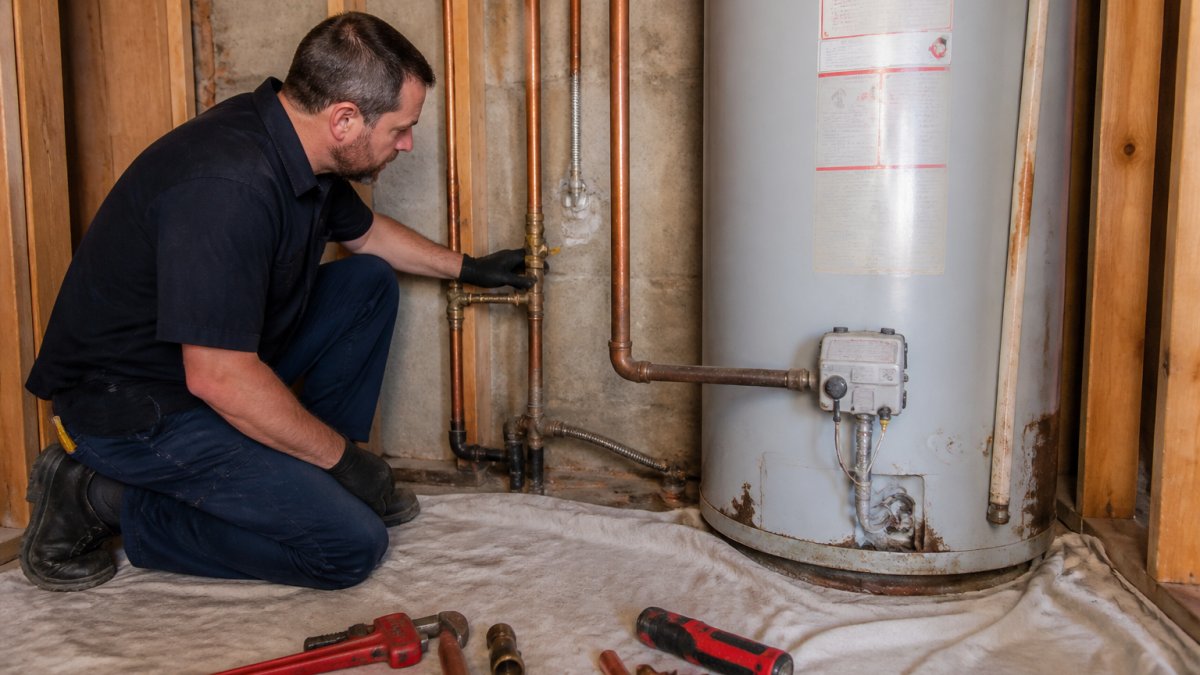
Permits are required for most water heater replacements, and the fee varies by municipality. Code requirements add cost when the old install was grandfathered. Common add-ons include:
- A drip pan and drain line under the unit
- An expansion tank on a closed plumbing system
- Seismic strapping where required
- Upgraded venting to meet current standards
- A pressure relief valve piped to a safe discharge point
Access is the quiet cost driver. A heater in a finished basement behind drywall, or in a tight closet, takes longer to remove and replace. That time shows up on the labor line.
Before the crew arrives, clear a path to the heater and move anything stored around it. It sounds trivial, but easy access shortens the job and keeps the labor estimate honest.
Rebates, Tax Credits, and Long-Term Ownership Cost
Incentives can meaningfully offset the upfront price of an efficient unit, especially heat pump water heaters. Eligibility rules and amounts change, so verify current programs before you count on them.
ENERGY STAR water heater rebate and tax credit information
Long-term ownership cost is where the smart money looks. A cheaper unit with a short lifespan and high operating costs can cost more over ten years than a pricier efficient model. Factor in:
- Energy use. Efficiency ratings translate directly into monthly operating costs.
- Lifespan. A longer-lasting unit spreads its purchase price over more years.
- Maintenance. Annual flushing and anode rod checks extend life and protect the warranty.
- Warranty terms. Labor coverage varies, and some warranties require professional installation to stay valid.
That last point matters. Many manufacturers require installation by a licensed professional to keep the warranty intact, which is one reason DIY installs are a gamble on a major appliance.
DIY water heater installation can void the manufacturer’s warranty and, on gas units, creates real safety risk. A licensed plumber protects both your warranty and your home.
U.S. Consumer Product Safety Commission on water heater safety
Conclusion
The challenge with water heater pricing is that the quote you get depends on your house, not a national average. The way to control it is to demand an itemized estimate and understand every line before you sign.
At Clayton McKay, our Massachusetts licensed plumbers handle the full job: equipment, permits, code compliance, removal, and disposal, with clear communication and accurate invoicing from quote to cleanup. Our Comfort Plus+ membership adds priority scheduling, rapid response for emergencies, and savings on service calls, so maintenance never slips.
Get an instant quote from Clayton McKay and replace your water heater with a crew that stands behind the work.
Frequently Asked Questions
What is a fair price to install a water heater in 2026?
A fair price reflects your specific unit, site conditions, and local labor rates, not a single national number. When you compare quotes, ask for an itemized breakdown: equipment, labor hours, permit, old unit removal, and any plumbing or electrical upgrades. A quote that lists each line is easier to sanity-check than a lump sum. Clayton McKay provides itemized quotes so you can see exactly what you are paying for before work starts.
Does water heater installation cost more for a tankless model?
Usually yes. Tankless water heater installation cost runs higher upfront because the unit itself costs more and the job often requires gas line upsizing, dedicated venting, and sometimes an electrical upgrade for the ignition and controls. The tradeoff is a longer service life and lower standby losses. If you plan to stay in the home more than a decade, ask your installer to model the long-term ownership cost, not just the install price.
Can rebates or tax incentives reduce the cost of a new water heater?
Often, yes, especially for high-efficiency heat pump water heaters. Federal tax credits and utility rebates change year to year, and eligibility depends on the model’s efficiency rating and your utility territory. Ask your installer for the model number and efficiency rating in writing so you can verify eligibility before you buy. Clayton McKay can point you to the paperwork you need, but confirm current incentive amounts directly with your utility and a tax professional.
How long does a water heater installation take, and will it disrupt my day?
A straight like-for-like tank swap typically takes a few hours, while a conversion to tankless or a job with venting and gas line changes can run a full day or more. Expect the water off for part of the visit and some noise from draining and hauling the old unit. Ask your installer to confirm the timeline and whether a permit inspection will add a follow-up visit before you schedule.

Leave A Comment