

Table of Contents
- Why Faulty Electrical Wiring Deserves Immediate Attention
- 1. Flickering Lights and Electrical Problems You Shouldn’t Ignore
- 2. Frequently Tripped Circuit Breakers and Blown Fuses
- 3. Burning Smells, Hot Outlets, and Other Early Warning Signs of an Electrical Fire
- 4. Buzzing, Crackling, and Other Unusual Electrical Sounds
- 5. Frayed Wiring, Damaged Cords, and Visible Deterioration
- 6. How to Tell If Wiring Needs to Be Replaced: Age, Materials, and Warning Signs
- 7. How Often Should Electrical Wiring Be Replaced?
- Frequently Asked Questions
Last Updated: October 16, 2026
Why Faulty Electrical Wiring Deserves Immediate Attention
Most home electrical problems give you warning before they turn dangerous.
This guide from Clayton McKay walks through the warning signs in the order they usually appear, from minor annoyances to genuine emergencies.
Here’s the throughline: every one of these symptoms points to heat, resistance, or a loose connection somewhere in the system. You don’t need to diagnose the exact fault yourself.
Flickering lights, tripped breakers, and warm switch plates are not quirks of an old house. They are the wiring telling you something is wrong.
1. Flickering Lights and Electrical Problems You Shouldn’t Ignore
Flickering lights and electrical problems are often the first visible clue that a circuit is struggling. A single bulb that flickers once when you flip the switch is rarely a concern. Lights that dim when the refrigerator kicks on, or pulse without any obvious cause, point to something bigger.
Watch for these patterns:
- Lights that dim when a large appliance starts
- Flickering across several rooms at once
- A fixture that flickers no matter which bulb you install
That third one matters most. If you’ve swapped the bulb and the flicker stays, the problem is in the wiring or the fixture, not the bulb.
When Flickering Is Normal vs. When It Signals a Fault
Normal flickering has a clear cause: a loose bulb, a dimmer switch that isn’t compatible with LED bulbs, or a brief dip when a big motor starts.
A loose connection at an outlet or switch is a common culprit. So is an overloaded circuit trying to carry more load than it was built for.
According to Electrical Safety Foundation guidance on home wiring, aging wiring and loose connections sit behind a large share of home electrical fires.
2. Frequently Tripped Circuit Breakers and Blown Fuses
A breaker that trips once a year is doing its job. A breaker that trips weekly, or every time you run the microwave and the toaster together, is telling you the circuit is overloaded or failing.
Most residential breakers are thermal-magnetic. The thermal element responds to sustained overload, the breaker warms up, bends a bimetal strip, and trips. The magnetic element responds instantly to a short or ground fault.
Here’s how to read it:
| Symptom | Likely Cause | What to Do |
|---|---|---|
| Trips when two big appliances run | Overloaded circuit | Spread the load across circuits |
| Trips with nothing unusual running | Short or ground fault | Call a licensed electrician |
| Breaker feels hot to the touch | Overheating breaker | Stop using the circuit now |
| Fuse blows repeatedly | Circuit drawing too much current | Have the circuit tested |
| Breaker trips immediately on reset | Active fault on the circuit | Do not keep resetting, call an electrician |
Why Repeated Trips Make the Problem Worse
The thing nobody tells you about repeated breaker trips is that the breaker itself wears out. Every trip stresses the mechanism. A breaker that trips constantly can eventually fail to trip at all, which removes your main safety net.
If you’re resetting the same breaker more than once a month, that’s your sign to have it looked at. If it trips again immediately after you reset it, stop.
How to Reset a Breaker Safely
- Unplug or turn off everything on that circuit.
- Push the breaker handle firmly to OFF, then back to ON.
- If it holds, plug devices back in one at a time to find the culprit.
- If it trips again with nothing plugged in, leave it off and call an electrician.
Never tape, wedge, or hold a breaker in the ON position. Never replace a breaker with a larger amperage than the wire and circuit were designed for. Both defeat the safety device and are common causes of panel fires.
Blown Fuses in Older Panels
If your home still uses a fuse box, a blown fuse is the same signal as a tripped breaker. The difference is that fuses are single-use. Replacing a fuse with a higher-amperage one, or with a coin or foil, is extremely dangerous and a well-documented fire cause. If a fuse blows more than once on the same circuit, treat it the same as a breaker that won’t stay reset: stop using the circuit and get it evaluated.
When a Tripping Breaker Is Urgent
Not every trip is an emergency. Use this quick filter:
- Schedule a visit: trips once a month or less, only under heavy load, no heat or smell.
- Call promptly: trips weekly, trips with normal load, or the breaker or panel feels warm.
- Stop and call now: trips immediately on reset, any burning smell, any scorch mark, or any spark at the panel.
A tripping breaker is a symptom, not a diagnosis. It may be a tired breaker, an overloaded circuit, a loose terminal, or a genuine wiring fault, and those have very different fixes and very different price tags. A licensed electrician can tell them apart in a single visit.
3. Burning Smells, Hot Outlets, and Other Early Warning Signs of an Electrical Fire
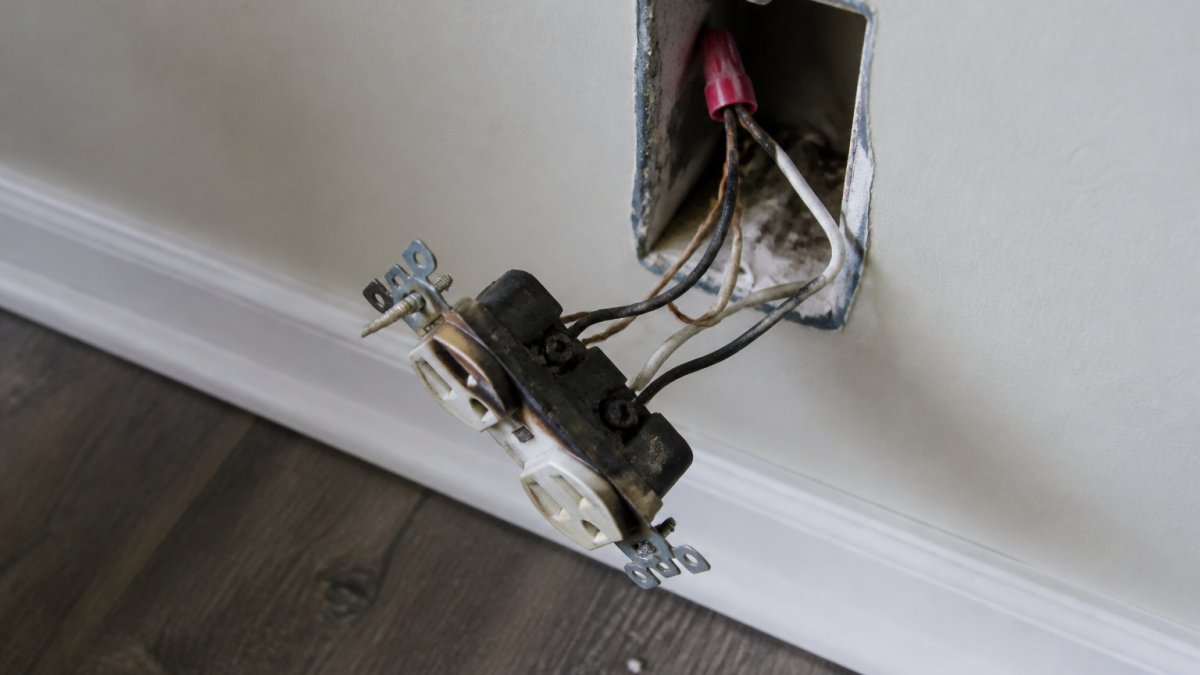
A burning smell near an outlet, switch, or fixture is the clearest early warning sign of an electrical fire. It means something is hot enough to scorch insulation or plastic, and that is a today problem, not a next-month problem.
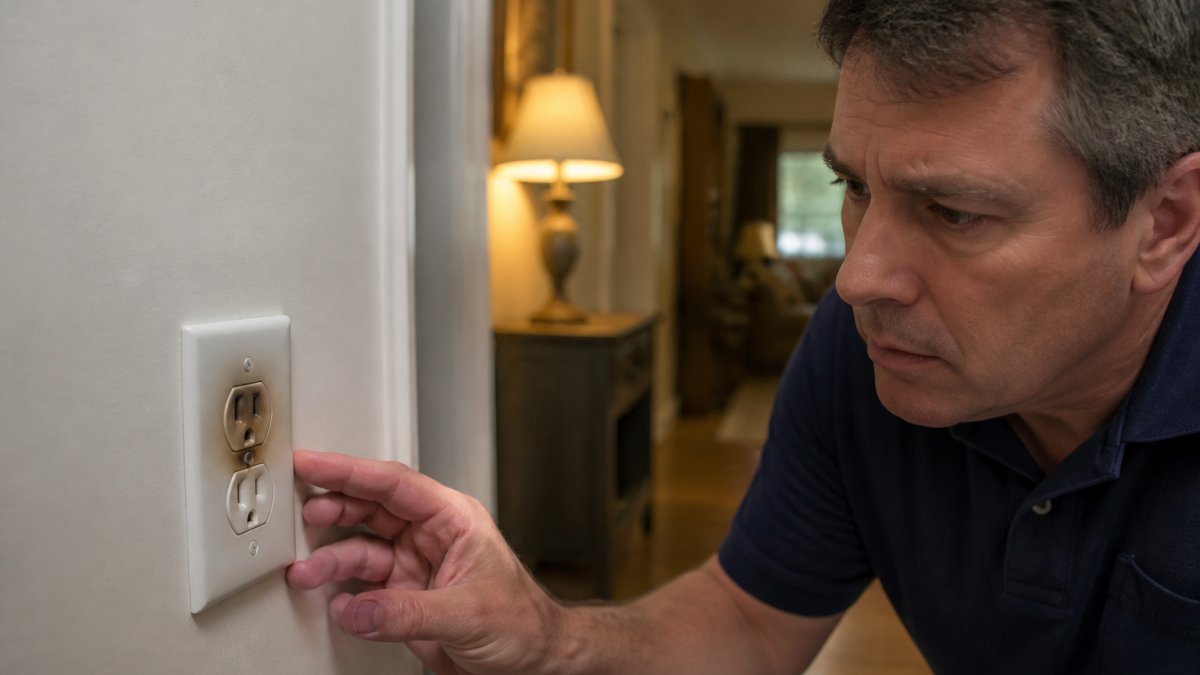
Other signs to take just as seriously:
- Outlet covers or switch plates that feel warm
- Discolored or scorched plastic around an outlet
- A faint burning smell with no visible source
[IMAGE: Close-up of a homeowner’s hand carefully touching an electrical outlet cover plate with a concerned expression, warm home lighting in the background, showing a discolored outlet | section:3.
What to Do the Moment You Notice Smoke or Scorch Marks
Act first, diagnose later. Here’s the sequence we recommend:
- Cut power to the circuit at the breaker panel if it’s safe to reach
- Do not touch the outlet, switch, or device
- Leave the area if you see smoke or flames, and call 911
- Once it’s safe, call a licensed electrician before restoring power
- Do not plug anything back into that outlet
Never ignore a burning smell because you can’t find the source. Odors can travel through walls from a hidden junction box. If the smell returns after you air out the room, treat it as an active fault.
4. Buzzing, Crackling, and Other Unusual Electrical Sounds
Buzzing, crackling, or sizzling from an outlet, switch, or fixture is never normal. A faint hum from a dimmer or an older fluorescent ballast can be harmless. Crackling and popping cannot.
The difference comes down to what’s making the noise:
- Buzzing: often a loose connection or a failing dimmer
- Crackling or popping: arcing, which means electricity is jumping a gap
- Sizzling: moisture or a short inside the box
Arcing is the one to worry about. It throws sparks, generates intense heat, and is a leading cause of electrical fires. If you hear crackling, stop using that circuit and call an electrician.
5. Frayed Wiring, Damaged Cords, and Visible Deterioration
Frayed wiring, cracked insulation, and exposed wires are signs of faulty electrical wiring you can often see with your own eyes. Check cords on lamps, appliances, and extension cords for:
- Cracked or brittle insulation
- Exposed copper
- Kinks or pinches
Extension cords deserve a special mention. They are meant for temporary use, not as permanent wiring. Daisy-chaining power strips or running a space heater on an extension cord is a common cause of overloaded circuits and fires.
If you find a damaged cord, replace it. If you find damaged wiring inside a wall or box, that’s a job for a licensed electrician.
6. How to Tell If Wiring Needs to Be Replaced: Age, Materials, and Warning Signs
How to tell if wiring needs to be replaced comes down to three things: the age of the home, the type of wiring, and the symptoms you’re seeing. Wiring doesn’t last forever, and some older types were never designed for modern electrical loads.
Replace or upgrade wiring when you see:
- Insulation that crumbles when touched
- Aluminum wiring in branch circuits
- Cloth-wrapped wiring
Older Wiring Types Common in Aging Homes
Two types show up most often in older homes. Knob-and-tube wiring was common before the 1950s and lacks a ground wire. Aluminum branch-circuit wiring was used in some homes in the 1960s and 1970s and is prone to loose connections at outlets and switches.
Neither automatically means your home is unsafe. Both mean the system deserves a professional look, especially if you’ve added appliances, air conditioning, or a home office since the wiring was installed.
7. How Often Should Electrical Wiring Be Replaced?
How often should electrical wiring be replaced? There’s no fixed number of years. Copper wiring in good condition can last decades. What drives replacement is condition and load, not the calendar. A 60-year-old home with well-maintained copper and an updated panel may be safer than a 20-year-old home with aluminum branch circuits and a history of DIY additions.
As a rough guide:
- 40+ years old with original wiring: worth an inspection
- Aluminum branch circuits: have them evaluated
- Any home with repeated symptoms: inspect now, not later
What a Professional Inspection Actually Involves
Most homeowners have never seen an electrical inspection and don’t know what to expect. Here’s the typical scope so you can prepare and ask better questions.
Before the visit, gather:
- The approximate age of the home and any known wiring updates
- A list of symptoms with dates (when the breaker tripped, which outlet felt warm)
- Photos of any scorch marks, discoloration, or damaged cords
During the inspection, a qualified electrician will typically:
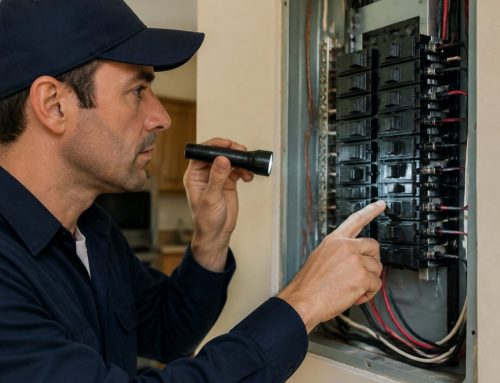
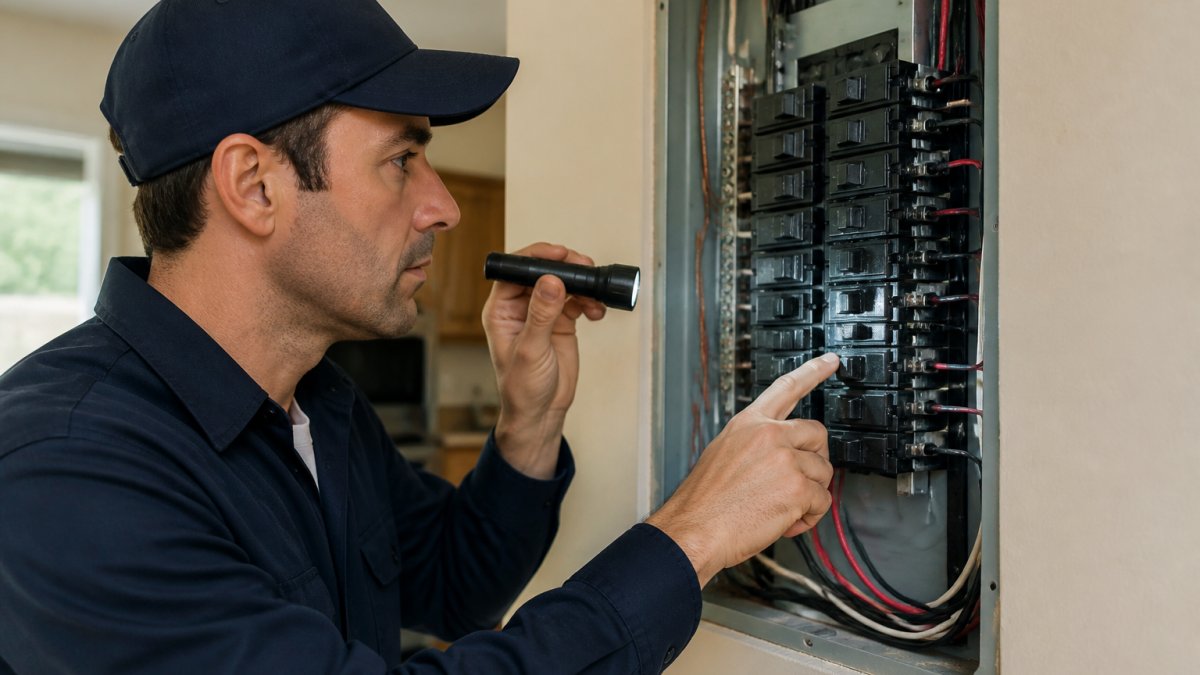
- Open the panel and check breaker torque, bus bar condition, and for signs of heat or arcing
- Test outlets and switches for correct polarity, grounding, and GFCI/AFCI function
- Look for aluminum branch wiring, knob-and-tube remnants, and improper splices
After the inspection, expect a written report with findings sorted into three buckets: safe, monitor, and repair now. Ask for photos of anything flagged. If the electrician recommends a full rewire, get a second opinion and a written scope, a full rewire is a major project and should never be recommended on a single symptom alone.
What an Inspection Is Not
An inspection is not a repair, and it is not a code-compliance certification. It’s a condition assessment. It also won’t catch every hidden fault, wiring inside finished walls is largely invisible without opening them. That’s why the symptom history you provide matters so much: it tells the electrician where to look.
Ask your electrician to check the torque on breaker and outlet terminals during an inspection. Loose terminals are one of the most common causes of overheating we see, and they’re easy to miss without a close look. Also ask whether AFCI protection is present on bedroom and living-area circuits, it’s one of the cheapest upgrades that catches arcing before it becomes a fire.
When to Skip the Inspection and Act Now
If you’re seeing smoke, sparks, a burning smell, or a breaker that won’t stay reset, don’t schedule an inspection, treat it as an active fault. Cut power to the circuit if it’s safe to reach the panel, leave the area if you see smoke or flames, and call 911 if there’s fire. Otherwise, call a licensed electrician for an emergency visit.
Frequently Asked Questions
What are the early warning signs of an electrical fire?
Watch for a burning or acrid smell near outlets and switches, scorch marks or discoloration on switch plates, outlets that feel hot to the touch, and lights that flicker or dim repeatedly. Buzzing or crackling sounds from outlets also signal danger. If you notice any of these, stop using the affected circuit and call a licensed electrician right away. These are the same signs of faulty electrical wiring that precede most home electrical fires.
How often should electrical wiring be replaced?
Most modern wiring lasts 50 to 70 years, but wiring in homes built before 1970 may need replacement sooner depending on the material. Aluminum wiring from the 1960s and 1970s, knob-and-tube wiring, and any wiring with deteriorated insulation should be evaluated by a licensed electrician. Age alone isn’t the deciding factor; the condition of the insulation, connections, and overall electrical load matter just as much.
Why do my lights flicker or dim when an appliance turns on?
A brief flicker when a large appliance like an air conditioner or refrigerator kicks on is usually normal. But if lights dim every time you run a microwave or hair dryer, or flicker without any appliance cycling, that points to an overloaded circuit, a loose connection, or undersized wiring. Persistent flickering lights and electrical problems of this kind should be inspected before they worsen.
When should I call an electrician about suspected wiring problems?
Call a licensed electrician immediately if you notice burning odors, scorch marks, hot outlets, sparks, or repeated breaker trips. These are signs of faulty electrical wiring that can escalate into a fire. For less urgent concerns like occasional flickering or a single warm switch plate, schedule an inspection within a week. A professional can identify issues a visual check can’t catch, including problems inside walls.

Leave A Comment