

Last Updated: October 23, 2026
Quick Summary
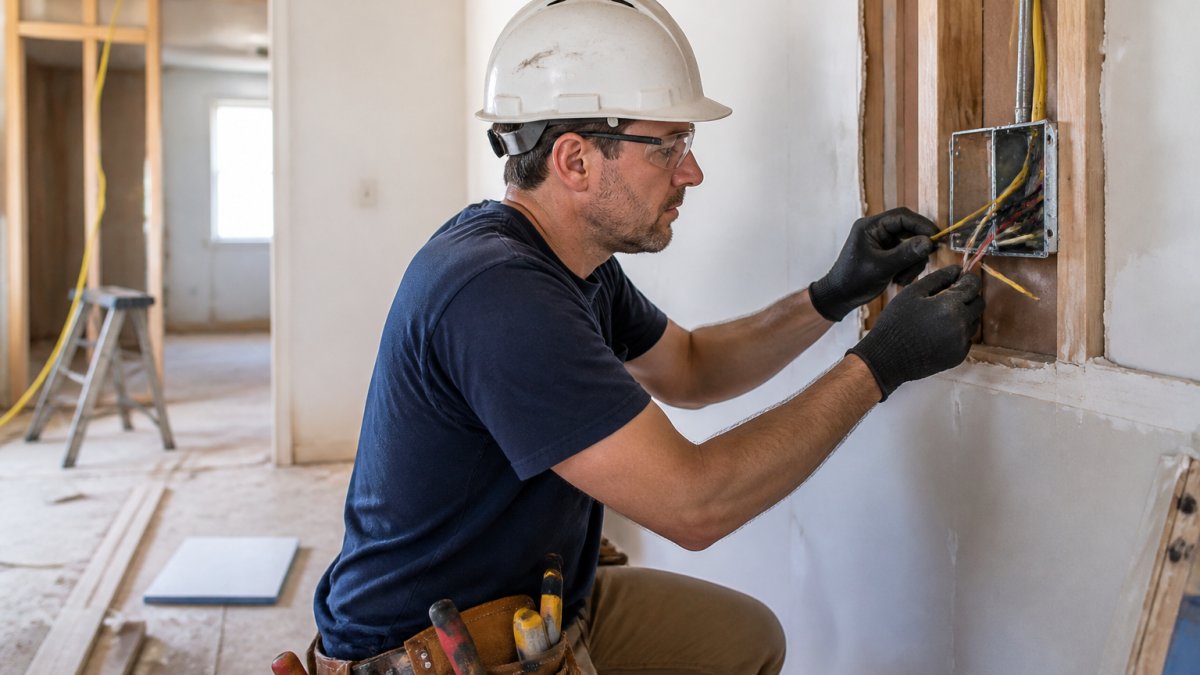
A licensed electrician for home renovations is essential for adding circuits, upgrading your panel, relocating outlets, or replacing aging wiring. Electrical work must be inspected and signed off when you pull a renovation permit, and unlicensed work can void your homeowner’s insurance, create safety hazards, and fail final inspection.
- Call a licensed electrician during the planning phase, not after walls are already open, to identify potential issues and avoid expensive mistakes.
- Kitchen renovations typically require at least two 20-amp circuits for countertop outlets, plus dedicated circuits for the refrigerator, dishwasher, microwave, and range.
- Before hiring, verify the electrician’s license with your state’s licensing board, request a certificate of insurance, confirm workers’ compensation coverage, and require a written scope and estimate.
- Older homes with cloth-insulated wiring (pre-1960) or knob-and-tube wiring should have full or partial rewiring during renovation, as these systems are dangerous by modern standards.
- Panel upgrades from 100-amp to 150 or 200 amps are common in renovations and require a licensed electrician, building permit, and utility inspection before service activation.
Table of Contents
- When to Hire a Licensed Electrician for Home Renovations
- Renovation Projects That Require a Licensed Electrician
- Signs of Faulty Electrical Wiring and When Replacement Is Necessary
- Home Electrical Inspection Before Renovation
- Electrical Panel Upgrade During Renovation
- Questions to Ask an Electrician Before Hiring
- Permits, Inspections, and Code Compliance
- Why Professional Expertise Matters in Electrical Renovation Work
- Frequently Asked Questions
When to Hire a Licensed Electrician for Home Renovations
A licensed electrician for home renovations is essential for anything beyond cosmetic updates.
Electrical work isn’t optional in most jurisdictions.
At Clayton McKay, our licensed electricians coordinate with your other contractors so the electrical system supports your vision and meets code.
The best time to call a licensed electrician for home renovations is during the planning phase, not after walls are already open.
Renovation Projects That Require a Licensed Electrician
Not every home improvement needs professional electrical work, but most do.
Running new wire, installing circuits, or modifying your panel requires a licensed electrician, including dedicated appliance circuits, new lighting, or service entrance upgrades.
Kitchen and bathroom electrical work
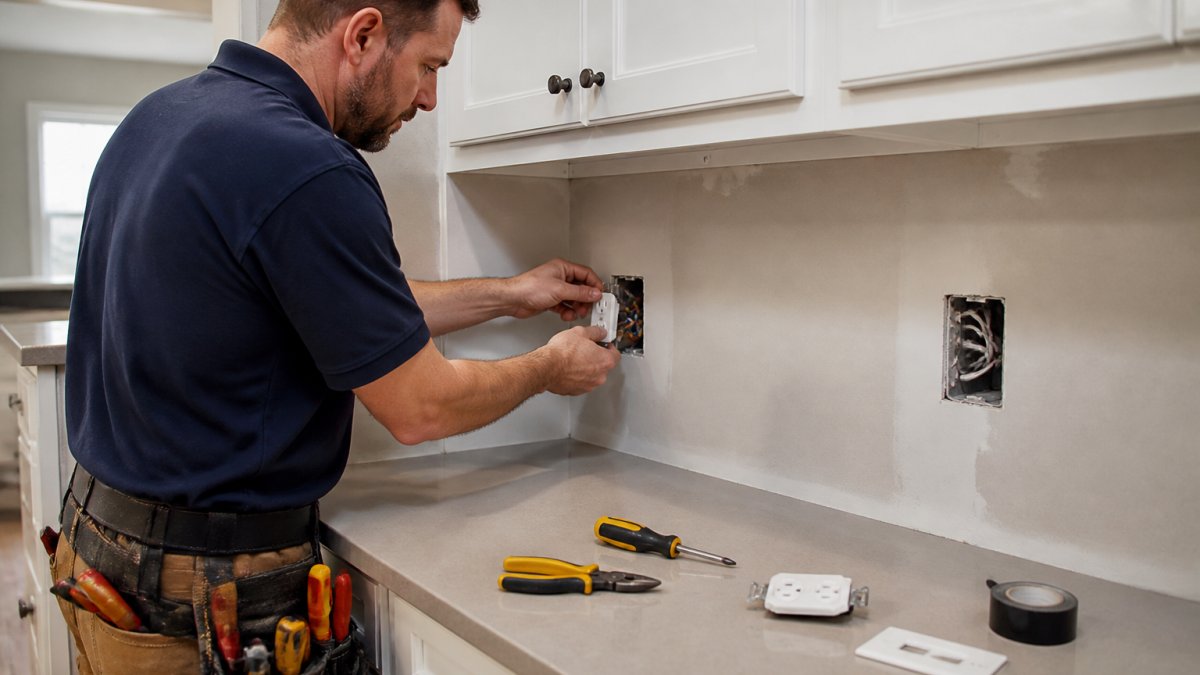
Kitchen and bathroom renovations almost always require electrical upgrades, since these high-moisture rooms have the strictest code requirements.
In kitchens, you need dedicated circuits for major appliances. A modern kitchen renovation typically requires at least two 20-amp circuits for countertop outlets, a separate circuit for the refrigerator, and dedicated circuits for the dishwasher, microwave, and range. Bathrooms require ground fault circuit interrupter (GFCI) protection on all outlets within six feet of water sources.
Adding or relocating outlets and switches
Moving an outlet seems straightforward but requires running new wire through walls and framing. Improper routing can damage the wire or create fire hazards, and outlets need the correct circuit and amperage for their location.
When you relocate outlets in a kitchen or bathroom, code requires them to be on dedicated circuits. In living areas, standard spacing rules apply: outlets should be no more than six feet apart.
Lighting installation and upgrades
New lighting often involves more than changing fixtures. Recessed, pendant, or track lighting requires properly installed wiring and a circuit sized for the total load; dimmers need specific wiring, and ceiling fans may need a dedicated circuit.
Kitchen and bathroom renovations have the strictest electrical code requirements and typically need multiple dedicated circuits.
| Room | Required Circuits | Code Requirement |
|---|---|---|
| Kitchen | Two 20-amp countertop, refrigerator, dishwasher, microwave, range | Dedicated circuits for major appliances |
| Bathroom | All outlets within six feet of water | GFCI protection required |
| Living areas | Outlets no more than six feet apart | Standard spacing rules apply |
Signs of Faulty Electrical Wiring and When Replacement Is Necessary
Older homes often have systems that were adequate when built but are dangerous today.
Cloth-insulated wiring, common in homes built before 1960, deteriorates over time. The insulation becomes brittle and can crack, exposing bare wire.
Flickering lights, dead outlets, or breakers that trip frequently indicate overload or wiring problems. Burning smells near outlets or the panel are immediate warnings, and discolored outlets or switch covers suggest heat buildup that precedes fires.
Two-prong outlets throughout the home indicate missing ground wires. While not always immediately dangerous, they can’t safely power modern appliances and devices. Most renovation projects include upgrading to three-prong, grounded outlets.
Home Electrical Inspection Before Renovation
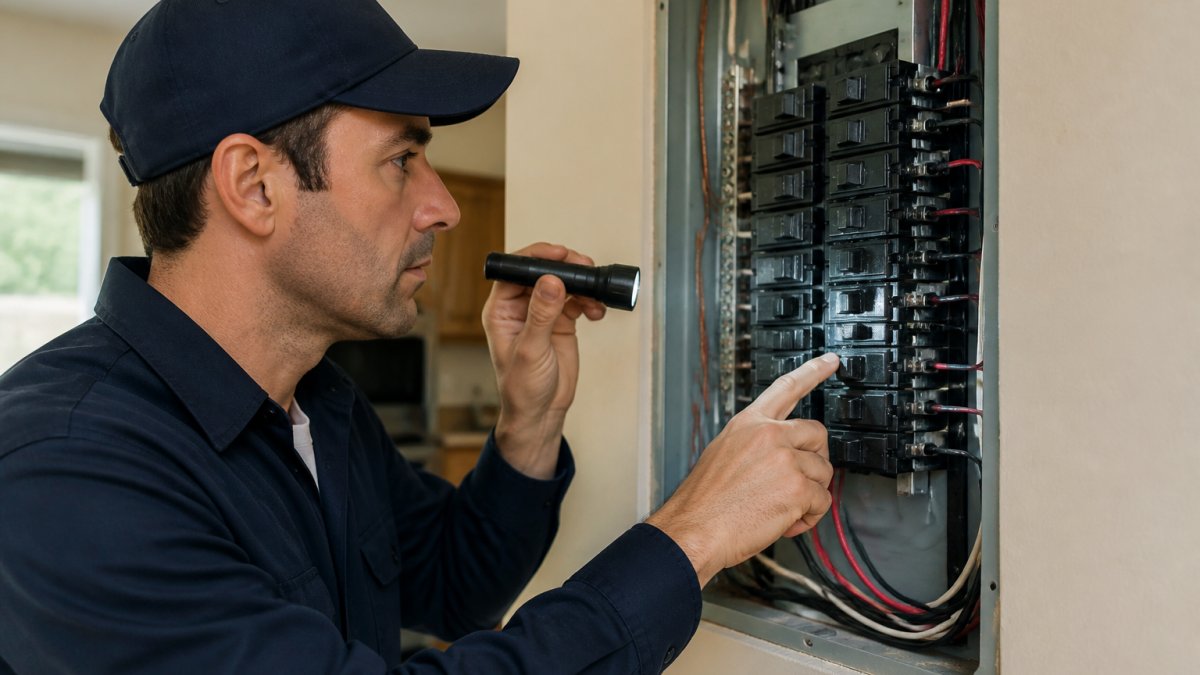
An inspector checks wiring condition, panel capacity, grounding, and the safety of outlets and switches, flagging code violations, hazards, and aging components so you can prioritize what to address.
Many homeowners learn their service is undersized.
Electrical Panel Upgrade During Renovation
Panel upgrades are common: older homes often have 60 or 100-amp service, insufficient for modern demands. If your renovation adds significant circuits or appliances, expect a panel upgrade recommendation during planning. Upgrading to 150 or 200 amps is a major project requiring a licensed electrician and a building permit. Learn the signs that indicate whether you need a panel upgrade.
The upgrade involves disconnecting the old service, installing a new panel and meter, and connecting new utility lines. A licensed electrician must do the work, the building department inspects it, and the utility inspects before activating service.
Cost and complexity make this non-DIY, and the utility requires a licensed electrician for the service upgrade. If your renovation adds significant circuits or appliances, expect a panel upgrade recommendation during planning.
Questions to Ask an Electrician Before Hiring
Before you hire a licensed electrician for home renovations, treat the interview like a pre-flight check. Browse answers to common electrical questions to help inform your decision. The goal is not just to hear the right answers but to verify them with documents and third-party sources. A reputable professional will expect this and make verification easy.
The five-point verification checklist
Run this checklist before you sign anything or pay a deposit.
- License. Ask for the license number and the name under which it is held. Verify it directly with your state’s electrical licensing board or the online license lookup most states maintain. Confirm the license is active, the classification covers residential electrical work, and the name matches the person or company you are hiring. A license number that cannot be verified is a stop sign.
- Liability insurance. Request a certificate of insurance showing general liability coverage and the policy limits. Call the insurer’s number on the certificate to confirm the policy is current. If the electrician cannot produce a certificate, you may be exposed to property damage or injury claims.
- Workers’ compensation. Ask whether the company carries workers’ compensation coverage for its employees. If a worker is injured on your property and the employer has no coverage, you can face liability. Confirm the coverage is active, not just promised.
- Written scope and estimate. Require a written estimate that separates labor and materials, lists the specific circuits, fixtures, and devices to be installed, states what is excluded, and identifies who pulls permits and schedules inspections. A one-line bid is not a scope.
- Warranty and references. Ask for the labor warranty in writing, including its duration and what it covers. Request three references from renovation projects similar in size to yours, and actually call them. Ask whether the electrician showed up when promised, communicated changes before making them, and returned to fix issues after final inspection.
A simple verification script: “Can you email me your license number, a certificate of insurance, and a sample written scope today?” Electricians who hesitate on any of the three are telling you something.
Red flags to watch for
- Vague or verbal-only estimates. If the price is a range with no line items and no exclusions, you cannot compare bids or hold anyone accountable.
- Pressure to skip permits. Any suggestion that a permit is unnecessary for panel work, new circuits, or bathroom and kitchen electrical is a serious warning. Unpermitted work can fail inspection, complicate a future sale, and give your insurer grounds to deny a claim.
- No physical business address or verifiable license. A phone number and a truck are not credentials.
Questions that reveal renovation experience
Ask these to separate general service electricians from renovation specialists:
- “How do you coordinate rough-in timing with my framer, insulator, and drywall contractor?”
- “What is your process for documenting existing wiring conditions before demolition?”
- “How do you handle discoveries like knob-and-tube or aluminum branch wiring found mid-project?”
A strong candidate answers these with specifics about sequencing, documentation, and inspection logistics. A weak one answers in generalities.
State electrical license lookup directory
Hire on verified documents, not on conversation. License, insurance, workers’ compensation, written scope, and warranty, confirmed independently, are the five items that protect you before the first wire is pulled.
Permits, Inspections, and Code Compliance
Electrical work in renovation projects is regulated at the state and local level, and the specifics vary by jurisdiction. The National Electrical Code (NEC) is the model code most jurisdictions adopt, often with local amendments, but the permitting authority, inspection schedule, and who may pull a permit are set locally. That is why the most useful thing a homeowner can do is confirm the rules for their own address before work begins.
How to check the rules where you live
- Identify your permitting authority. Most often it is the city or county building department; in some areas it is a state or regional authority. A quick search for “[your city or county] building department electrical permit” will usually surface the right office.
- Ask three questions. (a) Does this scope require an electrical permit? (b) Who is allowed to pull the permit, must it be the licensed contractor, or can the homeowner pull it? (c) What inspections are required and at what stages?
- Ask about local amendments. Many jurisdictions adopt the NEC with amendments that affect residential work, such as requirements for arc-fault circuit interrupter (AFCI) protection, ground-fault circuit interrupter (GFCI) protection, tamper-resistant receptacles, or dedicated circuits. Ask the department which edition of the NEC is in force and whether local amendments apply.
- Confirm the inspection sequence. For a renovation, inspections commonly occur at rough-in (after wiring is run but before drywall) and at final (after devices, fixtures, and panel connections are complete). Some jurisdictions require a separate service or panel inspection. Ask for the sequence in writing so your schedule reflects it.
Do not assume a rule from a neighboring city applies to yours. Permit thresholds, inspection stages, and licensing requirements can differ across jurisdictions, and a permit that is valid in one may not satisfy another.
What inspectors actually check
At rough-in, inspectors typically verify wire type and gauge against circuit amperage, cable routing and protection through framing, box fill and support, grounding and bonding, and the absence of unsupported or improperly stapled runs. At final, they check device installation, GFCI and AFCI protection where required, fixture and appliance connections, panel labeling, and that the work matches the permitted scope.
Why code compliance matters beyond passing inspection
The NEC exists because electrical failures follow predictable patterns, overloaded circuits, poor connections, missing grounding, and unprotected receptacles in wet areas. Code requirements are written to interrupt those patterns. Work that passes inspection is more likely to be safe, insurable, and acceptable to a future buyer’s inspector. Unpermitted or non-compliant work can surface during a home sale, trigger a re-inspection requirement, or give an insurer a reason to deny a claim after a fire.
Who pulls the permit
In most jurisdictions, the licensed electrical contractor pulls the permit and is responsible for scheduling inspections and correcting any failed items. Some jurisdictions allow homeowners to pull permits for work on their own primary residence, but that usually does not change the requirement that the electrical work itself be performed by a licensed electrician. Clarify this with your building department before demolition begins, because the answer affects your contract, your schedule, and your liability.
Permits and inspections are local. Confirm the permitting authority, the required inspection stages, and the current code edition for your address before work starts, and put the permit and inspection responsibilities in the written scope.
Why Professional Expertise Matters in Electrical Renovation Work
Electrical work is one of the few renovation trades where amateur mistakes can cause fires, electrocution, or death.
A licensed electrician who pulled permits and passed inspection is accountable if something goes wrong.
Clayton McKay has served homeowners since 1973 with reliable electrical work on renovations of every size, from outlet relocation to complete panel upgrades.
Electrical work during renovation is too important to leave to chance.
Frequently Asked Questions
When should I hire a licensed electrician for a home renovation?
Hire a licensed electrician whenever your renovation involves adding circuits, relocating outlets, upgrading your electrical panel, or touching existing wiring. Any work that affects your home’s electrical system, including new lighting, kitchen or bathroom upgrades, or full rewires, requires professional expertise. A licensed electrician ensures code compliance, obtains necessary permits, and protects your safety and warranty coverage.
What are the signs of faulty electrical wiring in my home?
Watch for flickering lights, outlets that don’t hold plugs firmly, a burning smell near outlets or switches, frequently tripped breakers, or visible damage to wiring. Older homes with cloth or knob-and-tube wiring need replacement. If your home is over 40 years old or you notice any of these signs, a professional electrical inspection before renovation can identify problems before they become safety hazards.
How do I verify a licensed electrician’s credentials before hiring?
Ask for proof of current licensure, insurance, and bonding. Request references from recent renovation projects. Check that they’re familiar with local electrical codes and permit requirements. A reputable electrician will provide license numbers, explain their approach upfront, and give you a detailed estimate. Never hire someone who avoids discussing licensing or discourages permits, that’s a red flag.
Should I upgrade my electrical panel during a home renovation?
If your panel is over 25 years old, you’re adding significant new circuits, or you’re planning major upgrades to appliances or heating systems, a service upgrade is often wise. A licensed electrician can assess whether your current capacity supports your renovation plans. Panel upgrades improve safety, support future needs, and may be required by code depending on the scope of your project.




Leave A Comment