

Last Updated: November 1, 2026
Quick Summary
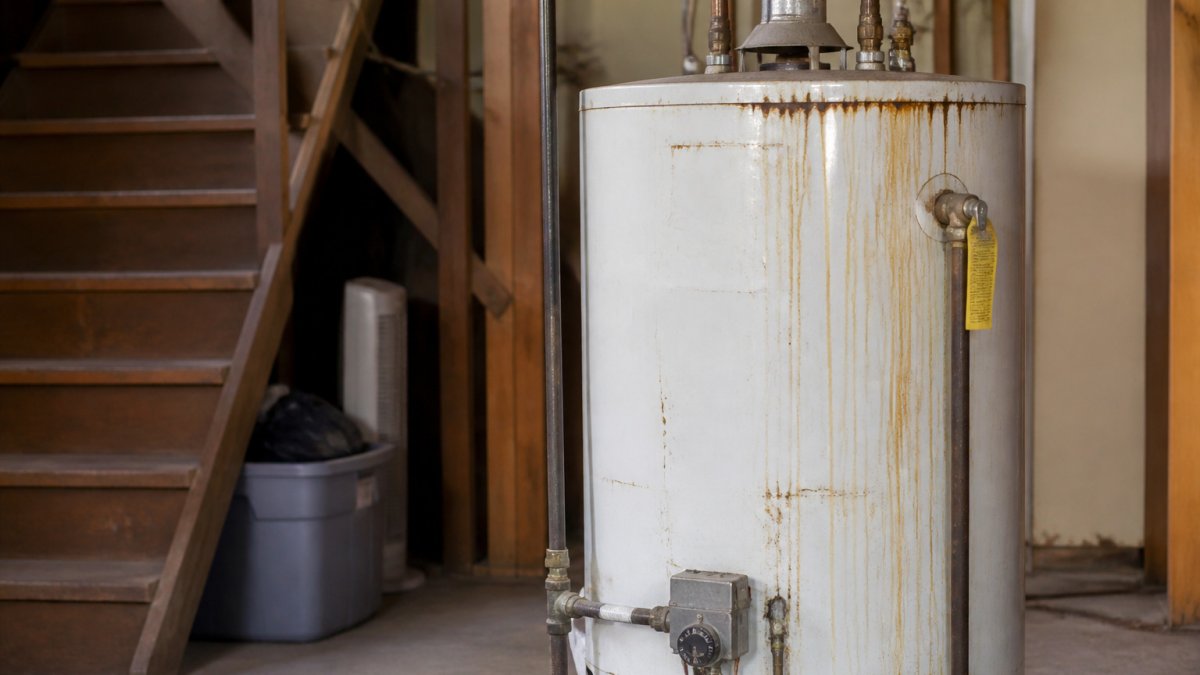
A conventional tank water heater typically lasts about 8 to 12 years, and water pooling under the tank is the most serious warning sign. Popping or rumbling noises, rusty or smelly hot water, and lukewarm water also signal that a water heater may need attention or replacement.
- Check the install date on the label; conventional tank units typically last 8 to 12 years.
- Water pooling under the tank usually means corrosion, which cannot be repaired; shut off power or gas first.
- Water at pipe fittings or the relief valve is often a fitting or valve problem that may be repairable.
- Popping or rumbling noises usually come from sediment, which flushing the tank can address.
- Set the temperature to about 120 degrees Fahrenheit before assuming the unit has failed.
Table of Contents
- How Long a Water Heater Should Last
- Water Leaking From the Bottom of the Tank
- Popping, Rumbling, and Knocking Noises
- Rusty, Discolored, or Smelly Hot Water
- Lukewarm Water and Hot-Water Shortages
- Symptom-to-Cause Troubleshooting Guide
- Repair or Replace Your Water Heater: Deciding Factors
- Scheduling an Inspection With Clayton McKay
- Frequently Asked Questions
How Long a Water Heater Should Last
A conventional tank water heater typically lasts about 8 to 12 years, and many units start showing warning signs well before the end of that range. Age alone does not mean a unit must be replaced, but it does change the decision. U.S. Department of Energy water heater guidance
Check the manufacturer’s label for the install date and the warranty length. If your unit is approaching the end of its expected service life, expect to see more of the symptoms below. Plan ahead so a failure does not leave you without hot water on a cold morning.
Routine maintenance can extend service life. Flushing sediment from the tank once a year and checking the anode rod helps protect the tank from corrosion.
Water Leaking From the Bottom of the Tank
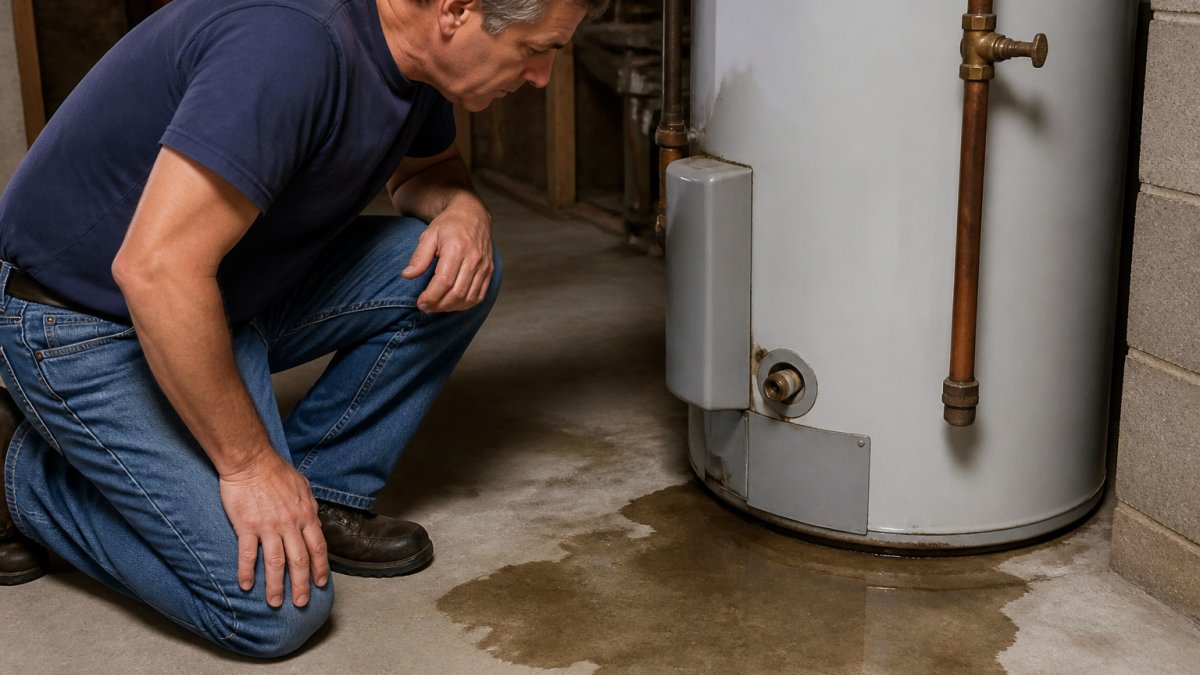
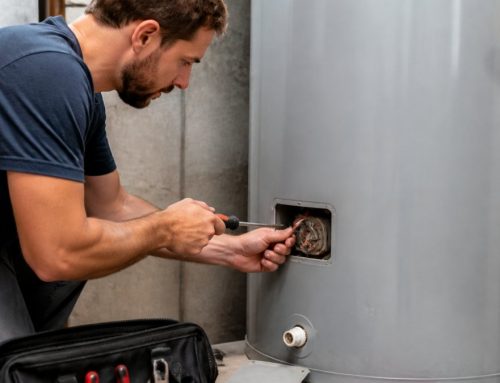
Water pooling around the base of a water heater is one of the most serious warning signs, but it is not automatic proof that the tank is finished. Where the water comes from changes the diagnosis and the cost.
Work through the likely sources in order:
- Tank body or bottom head. A puddle that forms under the tank shell, with no water at the top fittings, usually means the steel has corroded through from the inside. This is a tank failure, and the unit cannot be repaired.
- Temperature and pressure relief valve. A valve that weeps or discharges continuously may be stuck, may have lost its rating, or may be reacting to excess pressure or temperature. The valve itself is replaceable, but the underlying cause needs to be checked.
- Pipe fittings and nipples. Loose dielectric nipples, unions, or flex connectors at the top of the tank often drip down the side and pool at the base, mimicking a tank leak. These are usually a simple tighten-or-replace fix.
- Drain valve. A worn drain valve washer or a valve left partly open will drip at the bottom. This is a low-cost repair.
- Condensation. On a cold morning, a tank can sweat, especially if it sits in a humid basement or garage. Wipe the tank dry and recheck in a few hours; condensation returns without a continuous drip path.
Watch out: Do not ignore a slow drip from the tank. Water can rot the floor, damage nearby systems, and hide the true source of the problem for months. A tank that is actively leaking can also trip a breaker or corrode electrical connections if water reaches them.
If you see water under the tank, act before you diagnose:
- Shut off the power at the breaker for an electric unit, or set the gas control valve to the off position for a gas unit. Do not relight a gas pilot yourself if you smell gas, leave the area and call your gas utility from a safe location.
- Close the cold water inlet valve on top of the tank to stop new water from entering.
- If the tank is leaking from the shell, do not keep resetting a tripped breaker or relighting the pilot to “test” it.
- Call a licensed plumber. A tank leak is not a do-it-yourself repair.
A leak at the top, around the pipe fittings or the relief valve, is often a fitting or valve problem and may be repairable. A puddle forming under the tank body is different, and that is the case where replacement usually becomes the answer. If you are unsure which one you have, shut the water off and let a technician trace the source before you commit to a new unit.
Popping, Rumbling, and Knocking Noises
Popping, rumbling and knocking sounds usually come from sediment that has built up at the bottom of the tank. As the water heats, trapped water boils beneath the sediment layer and the bubbles cause the noise.
Noise alone is not proof that a tank must be replaced. Flushing the tank can clear some sediment and quiet the unit. If the noise returns quickly or gets louder, the buildup may be heavy enough that the tank is losing efficiency and wearing out.
Rusty, Discolored, or Smelly Hot Water
Rust-colored, cloudy or smelly hot water often points to corrosion inside the tank. The water may carry rust flakes, and a sulfur or rotten-egg smell can come from bacteria reacting with the anode rod.
Run the hot tap for a few minutes to see whether the discoloration clears. If it only appears in hot water and not in cold, the problem is most likely inside the water heater. Persistent rust streaks usually mean the tank lining is failing.
Lukewarm Water and Hot-Water Shortages
If your water runs lukewarm, or if you run out of hot water sooner than you used to, the heating element or thermostat may be failing. Sediment can also reduce how much water the tank can heat at one time.
Before assuming the worst, confirm that the temperature setting is correct, usually around 120 degrees Fahrenheit. A setting that is too low will feel like a supply problem. If the water stays cool or the shortage gets worse after adjustment, a technician should test the elements and thermostat.
Symptom-to-Cause Troubleshooting Guide
Use this table to match what you see with the likely cause and the right next step.
| Symptom | Likely cause | Next step |
|---|---|---|
| Water under the tank | Tank corrosion or failure | Shut off power or gas and call a plumber |
| Water at pipe fittings | Loose fitting or valve | Tighten or replace the fitting |
| Popping or rumbling | Sediment buildup | Flush the tank and recheck |
| Rusty or smelly hot water | Internal corrosion or anode rod failure | Test water and inspect the tank |
| Lukewarm water | Failed element or thermostat | Check the setting, then test components |
| Hot-water shortage | Sediment or heating element problem | Inspect and service the unit |
Repair or Replace Your Water Heater: Deciding Factors
Repair makes sense when the problem is a single replaceable part and the tank itself is sound. Replacement is usually the better choice when the tank leaks, the unit is near the end of its service life, or repairs are stacking up. The hard part is turning that rule of thumb into a decision for your specific unit.
Start with the part, not the symptom
Several common complaints come from components that cost far less than a new heater:
- Lukewarm or insufficient hot water can come from a failed heating element, a tripped high-limit switch, a bad thermostat, or a broken dip tube. On a gas unit, a dirty flame sensor or a failed thermocouple can shut the burner down.
- Popping or rumbling is usually sediment, which a flush can address.
- Smelly hot water often traces to the anode rod or to bacteria in the tank, and replacing the anode or disinfecting the tank is inexpensive compared with replacement.
- A leak at a fitting, valve, or drain is a repair, not a replacement.
What cannot be repaired is a tank shell that has corroded through. Once water is coming through the steel, the unit is done.
Use the age-and-repair math
A conventional tank heater lasts about 8 to 12 years. A common rule of thumb is that if the unit is past roughly half its expected service life and the repair costs a meaningful fraction of a new installation, replacement is often the better value. The reasoning is simple: an older tank that needs one repair today is likely to need another soon, and you pay the diagnostic and labor cost twice.
Weigh these factors together:
- Age versus expected life. A 12-year-old tank with a failed element is a different decision than a 4-year-old tank with the same fault.
- Repair frequency. Two or more repairs in a year or two points toward replacement.
- Efficiency. Older units may run at a lower efficiency than current models. A new unit can reduce standby losses, and a tankless or heat-pump unit can change operating cost, though installation cost is higher.
- Fuel type and venting. A gas unit may need a different venting arrangement or gas line capacity for a replacement, and an electric unit may need a circuit upgrade. Those costs belong in the comparison.
- Remaining service life. A repair that buys a few months on a tank already at the end of its life is rarely worth it.
Tank versus tankless, and fuel-type differences
Warning signs do not map one-to-one across unit types:
- Storage tank units show the classic signs: tank leaks, rust-colored water, sediment noise, and standby heat loss.
- Tankless units have no tank to leak, so the warning signs shift to error codes, fluctuating outlet temperature, reduced flow, and scale buildup in the heat exchanger that requires descaling.
- Gas units add combustion and venting concerns, including a yellow burner flame, soot, or backdrafting, which are safety issues rather than efficiency annoyances.
- Electric units add breaker trips, element failures, and thermostat faults.
A tankless system heats water on demand and can last longer, but it usually costs more to install and may require a different gas line or electrical supply. Ask a licensed technician which option fits your home, your fuel type, and your venting.
Before you approve a replacement, ask the technician three questions: Is the tank shell sound, or is this a component fault? What is the unit’s install date and expected remaining life? And what would the repair cost compared with a new installation? The answers usually make the decision clear.
Scheduling an Inspection With Clayton McKay
If you see one or more of these signs, schedule an inspection before the problem becomes an emergency. Clayton McKay has served Plymouth, the South Shore and Cape Cod since 1973, with licensed plumbers and certified technicians.
To get started, you can request an instant quote from Clayton McKay for water heater service, replacement or maintenance.
Frequently Asked Questions
What is the typical life expectancy of a water heater?
A standard tank water heater usually lasts about 8 to 12 years, depending on the water quality in your area, how often it is maintained, and whether it has a sacrificial anode rod that is still doing its job. Tankless units often last longer, commonly 15 to 20 years. Age alone does not mean the unit has failed, but a tank approaching or past the 10-year mark deserves a closer inspection, especially if you notice leaks, rust-colored water, or reduced hot-water output. Check the manufacturer’s label for the install date and warranty term to plan ahead.
Can a leaking water heater be repaired, or does it need replacing?
It depends on where the leak originates. A leak from a loose drain valve, a fitting, or a pressure relief valve can often be repaired. A leak from the bottom of the tank, or water seeping through the tank walls, usually means internal corrosion has failed the tank, and replacement is the safer choice. Shut off the power or gas supply and the cold water inlet before inspecting, and call a licensed plumber if you cannot identify the source.
What does it mean when a water heater makes popping or rumbling noises?
Popping or rumbling usually signals sediment buildup at the bottom of the tank. Water trapped under the sediment boils and forces bubbles up through the layer, which creates the noise. Flushing the tank can help in early stages. If the noise persists after a flush, or the tank is older than about 10 years, the sediment may have already damaged the heating element or tank bottom, and replacement should be considered.
Should I flush a 15-year-old water heater?
A 15-year-old tank is past the typical service life, so flushing is unlikely to extend its life meaningfully and may disturb sediment that is already causing problems. Flushing is worth doing on a newer unit to remove sediment and maintain efficiency. For an older tank with leaks, rust-colored water, or noise, have a licensed plumber evaluate whether replacement makes more sense than a flush.


Leave A Comment