

Table of Contents
- Emergency Heating Repair in Plymouth, MA: Start Here
- What to Do Before a Technician Arrives
- When to Evacuate: Safety Warnings That Override Everything
- Furnace Not Working? Troubleshooting You Can Do in Five Minutes
- Emergency Boiler Repair: Leaks, Lockouts, and Oil-Fired Systems
- 24/7 Heating Repair: Response Times and Dispatch Coverage
- Heating Repair Cost: What Drives the Bill and How to Avoid Surprises
- Choosing a Heating Service: Licensing, Guarantees, and What to Ask
- Frequently Asked Questions
Last Updated: October 19, 2026
Emergency Heating Repair in Plymouth, MA: Start Here
When the heat cuts out on a cold South Shore night, the first hour matters most. Emergency heating repair in Plymouth, MA is the fastest path back to a warm house, and knowing who to call and what to say saves time and money.
The short version: shut off the fuel supply if you smell gas, confirm the thermostat and breaker, then call a licensed technician and describe the symptom plainly.
What to Do Before a Technician Arrives
The right move before the call is a short, safe checklist that gives the technician useful information without risk.
Start with these steps:
- Confirm the thermostat is set to Heat and above room temperature
- Check that the furnace or boiler switch looks like a normal light switch in the ON position
- Reset any tripped breaker once, and only once
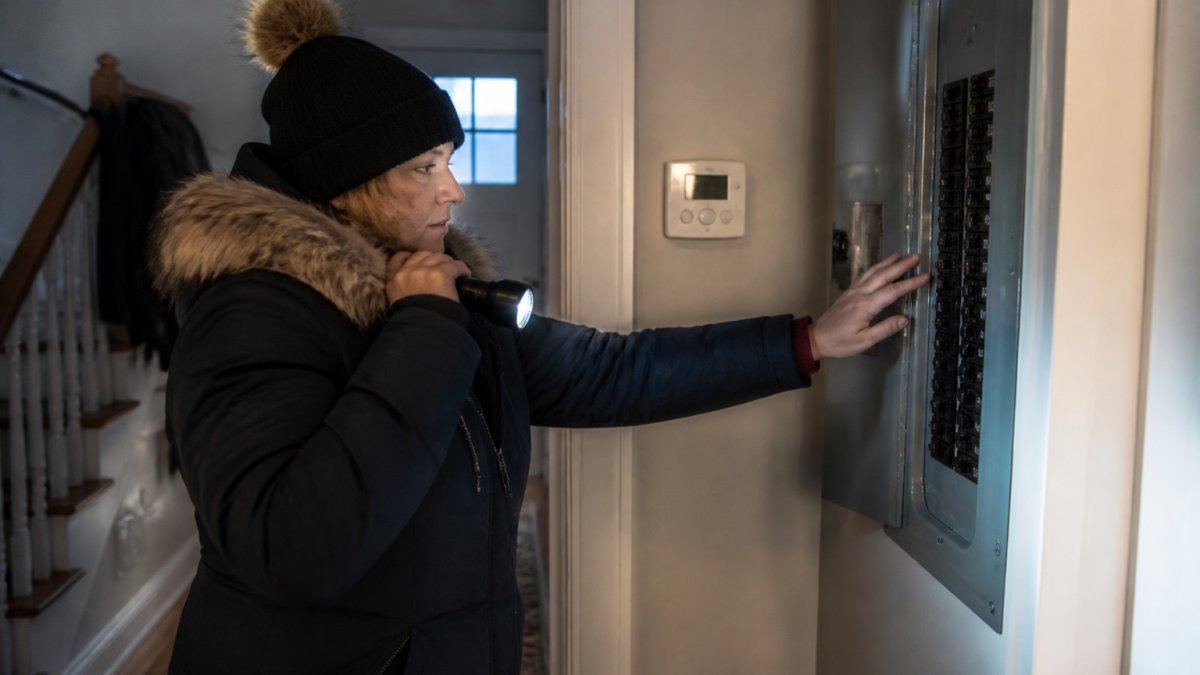
Do not open panels, bleed radiators on a system you do not know, or keep resetting a unit that keeps locking out. For general home heating safety guidance, the U.S. Department of Energy heating guidance is a solid starting point.
Never keep pressing reset on a furnace that locks out repeatedly. Each reset can release unburned fuel into the combustion chamber, and the consequence is a delayed ignition that damages the unit or worse.
When to Evacuate: Safety Warnings That Override Everything
Some symptoms mean stop troubleshooting and leave. If you smell gas, hear a sustained hiss near a fuel line, or see soot, scorch marks, or a yellow, lazy flame where you normally see blue, get everyone out and call your gas utility from outside.
Carbon monoxide is the quieter danger. The CDC carbon monoxide safety guidance recommends a CO alarm on every level of the home and outside sleeping areas. If an alarm sounds, treat it as real: evacuate, then call emergency services.
- Gas odor: evacuate, then call the utility
- CO alarm: evacuate, then call 911
- Visible soot or scorching: shut the system off at the thermostat and call a technician
- Water pouring from a boiler: shut off the water feed if you can reach it safely
Everything else is a repair call. These are evacuations.
Furnace Not Working? Troubleshooting You Can Do in Five Minutes
A furnace not working is usually one of five things: thermostat setting, power, fuel supply, a clogged filter, or a safety lockout. Five minutes of checks rules out the easy ones before you pay for a service call.
Run through this in order:
- Thermostat: set to Heat, temperature above room temp, fresh batteries
- Power: the furnace switch is ON and the breaker is not tripped
- Filter: a clogged filter chokes airflow and can trigger a high-limit shutdown
- Fuel: confirm the gas valve is open or the oil tank has fuel
- Error code: many units flash a code through a small window
If the unit fires and then shuts down within a minute or two, that is a lockout, not a thermostat problem. Stop there and call.
Furnace-Specific Checks Before You Call
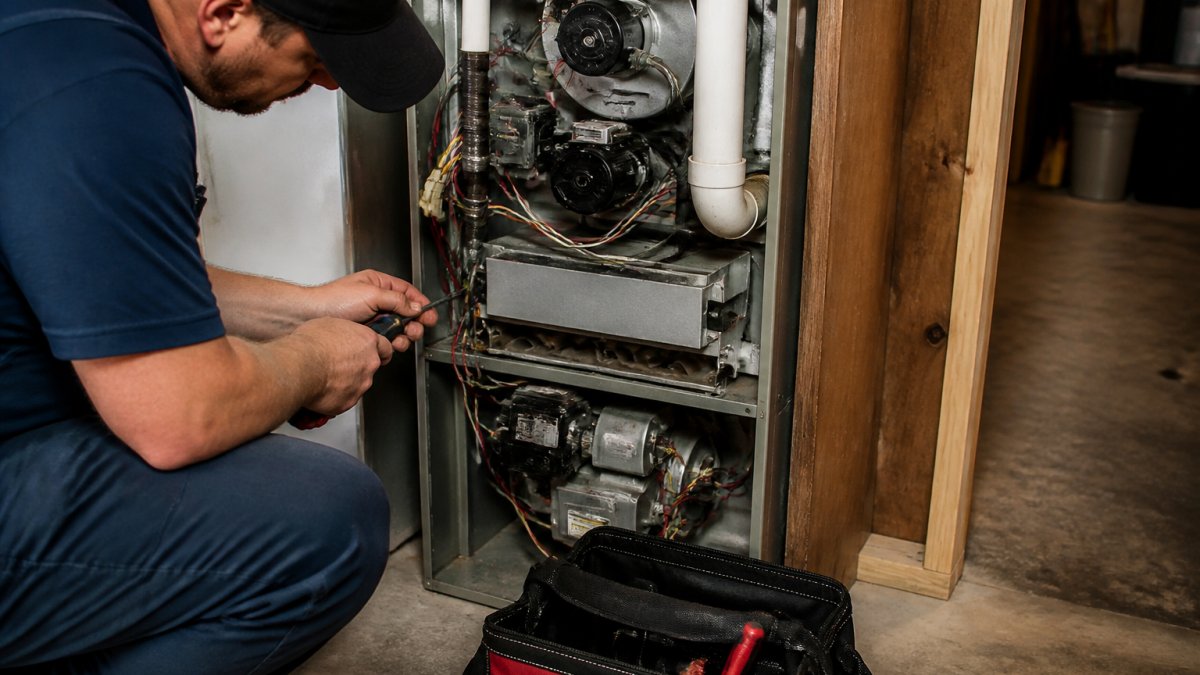
Gas units often trip on a dirty flame sensor or blocked pressure switch; oil-fired furnaces tend to fail on a clogged nozzle, dirty filter, or air in the fuel line. Knowing your type helps the dispatcher send the right technician with the right parts.
Tell the dispatcher your fuel type, the unit’s age, and the exact symptom in one sentence. “Oil furnace, about fifteen years old, starts then shuts off after thirty seconds” gets a faster, more accurate response than “the heat is broken.”
Emergency Boiler Repair: Leaks, Lockouts, and Oil-Fired Systems
Emergency boiler repair differs from furnace work because water and pressure are involved. A boiler that leaks, overpressurizes, or locks out repeatedly needs a licensed technician, not a homeowner with a wrench.
Watch for these signs:
- Water pooling under the boiler or staining nearby
- Pressure gauge climbing into the red zone
- Radiators cold at the top and hot at the bottom
- A lockout light that returns after every reset
Oil-fired boilers add failure points: a clogged nozzle, dirty filter, failing igniter, or a fuel line that has drawn air. These are not DIY fixes. If you smell oil, shut the system off and call.
24/7 Heating Repair: Response Times and Dispatch Coverage
24/7 heating repair means someone answers the phone at 2 a.m., not a voicemail box.
How emergency dispatch actually works:
A well-run heating company does not send the nearest truck blindly.
- Triage first. The dispatcher asks what the system is, what fuel it uses, and the symptom. A no-heat gas furnace, a leaking boiler, and a CO alarm are three different emergencies.
- Technician matching. An oil-fired boiler needs a technician carrying oil-specific parts; a heat pump needs someone current on refrigerant work.
- Parts staging. The best response is a technician who arrives with the likely part already on the truck, which only happens if the dispatcher captured enough detail to predict the failure.
- Route sequencing. Calls are ordered by urgency and geography. A provider with a tight service area can often give a tighter window than a call center routing technicians from outside the region.
What a realistic arrival window looks like:
No honest provider promises a precise minute on an emergency call, because the previous job can run long.
The most useful question on an emergency call is not “how soon can you get here” but “what is your realistic arrival window, and will you text me when the technician is en route.” A firm window beats a vague promise, and a text notification beats both.
Questions to ask the dispatcher:
- Is a live person answering this phone right now, or am I leaving a message?
- What is the realistic arrival window tonight, as a range?
- Will I get a text or call when the technician is en route?
- Is there an after-hours charge, and is it flat or a multiplier?
How coverage varies:
Coverage is not uniform.
What to have ready when you call:
Your fuel type, system type, the unit’s approximate age, the exact symptom, and your address.
We staff our phones around the clock and dispatch licensed technicians across the South Shore and Cape Cod, and we will tell you the realistic window before we hang up rather than promise a number we cannot hit.
Heating Repair Cost: What Drives the Bill and How to Avoid Surprises
Heating repair cost depends on the diagnosis, parts, time of day, and labor, so no honest provider quotes a firm number before seeing the system.
The four layers of an emergency heating bill:
- Diagnostic or trip fee, a flat charge to identify the fault, usually quoted before dispatch and unchanged by what the technician finds.
- After-hours premium, evenings, weekends, and holidays typically carry a surcharge. Ask whether it is a flat add-on or a multiplier; the two produce very different totals on a long job.
- Parts, the failed component, marked up from the technician’s cost. Ask for the part number and whether it is OEM or aftermarket.
- Labor, billed hourly or as a flat repair price. Flat pricing protects you if the job runs long; hourly protects you if it is quick.
Ask for these before work starts:
- The diagnostic fee, stated upfront and in writing
- Whether the diagnostic fee is credited toward the repair if you approve the work
- The exact after-hours or weekend rate, as a dollar figure or a stated multiplier
- A written estimate after diagnosis, before any repair begins
Ask the dispatcher one question before you book: “Is the diagnostic fee credited toward the repair if I approve the work?” Providers that credit it treat the fee as a deposit; providers that do not are telling you the fee is the fee, fine, as long as you know before the truck rolls.
What actually moves the number up or down:
- System type. Gas furnaces, oil-fired furnaces, boilers, and heat pumps have different failure points and part costs. Oil-fired equipment tends to cost more in parts because nozzles, filters, and igniters are consumables.
- Access. A unit in a finished basement with a clear path is a faster job than one wedged behind stored boxes or in a crawlspace. Clearing access before the technician arrives is free labor you can do yourself.
- Time of day. A 2 a.m. holiday call costs more than a Tuesday morning call for the same repair. If the house is cold but safe, no gas odor, no CO alarm, no water pouring from the boiler, waiting until morning can be a legitimate money-saving choice.
- Whether the diagnosis was tested. A technician who replaces a part without testing the circuit often replaces the wrong part, and the second visit is the real cost surprise.
The biggest cost surprise is not the repair, it is the second visit. A technician who diagnoses without testing often replaces the wrong part. Ask what tests confirmed the diagnosis before you approve the work, and get the answer in the estimate.
How to compare two quotes without getting fooled:
A lower diagnostic fee with a higher after-hours multiplier can cost more than a higher diagnostic fee with a flat rate.
We do not publish a single flat emergency rate because the honest answer depends on your system.
Choosing a Heating Service: Licensing, Guarantees, and What to Ask
Choosing a heating service comes down to credentials, guarantees, and communication.
Use this checklist when you call:
- Is the technician licensed for the work being done?
- Is the diagnostic fee stated upfront?
- Will I get a written estimate before repairs?
- What is the warranty on parts and on labor?
A common mistake is hiring on price alone. The cheapest diagnostic often leads to the most expensive repair because nobody tested the system properly.
That is how we operate at Clayton McKay. Our Comfort Plus+ membership gives members priority scheduling, rapid emergency response, and savings on repair work, backed by the kind of clear communication our customers describe in reviews like Evie Saunders’, who noted the technician was professional and friendly and explained what needed to be done. For broader guidance on home heating systems, the ENERGY STAR heating and cooling guidance is worth a read.
A cold house in the middle of a South Shore winter is stressful, and the last thing you need is a vague promise and a surprise bill.
Frequently Asked Questions
What should I do if my heating system stops working?
Check the thermostat batteries and settings first, confirm the furnace switch and circuit breaker are on, and replace a clogged filter. If you smell gas, see soot or scorching, or hear banging or screeching, shut the system off and call for emergency heating repair. For a boiler, check the pressure gauge and look for water near the base. In Plymouth and the South Shore, call a licensed provider rather than restarting a unit that has tripped a safety switch.
When should I call for emergency furnace repair?
Call immediately if you smell gas, the carbon monoxide alarm sounds, you see flames or soot outside the combustion chamber, or the furnace repeatedly shuts off and will not stay running. A furnace not working during freezing weather also qualifies as an emergency because pipes can burst within hours. If the issue is a cold house but the system runs, you can usually wait for a standard appointment.
How is heating repair cost determined?
Heating repair cost depends on the diagnosis, the part needed, the system type (gas, oil-fired, or boiler), and whether the call happens after hours. A simple igniter or thermocouple swap costs far less than a blower motor or heat exchanger. Ask for a diagnostic fee upfront and a written estimate before work begins. Membership plans can reduce service call fees and repair charges, but confirm the terms before signing up.
How quickly can an emergency heating technician respond?
Response times vary by provider, time of day, and how many calls are already queued. A 24/7 heating repair provider with local technicians in Plymouth and the surrounding area can typically reach you faster than a company dispatching from Boston. When you call, ask for an arrival window and the after-hours rate, and confirm the technician is licensed for your system type before authorizing work.

Leave A Comment