

Last Updated: November 2, 2026
Quick Summary
Choosing local hvac contractors usually means faster response times, a technician who knows your home’s history, and an owner whose reputation depends on your street rather than a call center. Verify licensing and insurance, compare written estimates line by line, and confirm your town is inside the service area before you need help.
- A local HVAC company is owned and operated within your region; a national chain is a franchise or corporate branch run from a distant headquarters.
- Confirm the license number with your state’s licensing board and ask whether the contractor pulls the required permit.
- Watch written estimates for exclusions such as ductwork modifications, refrigerant charges, disposal fees, and after-hours surcharges.
- Test the after-hours line during business hours to learn whether a live dispatcher or a voicemail box answers.
- A larger provider may be the better choice for complex commercial systems, multi-building portfolios, or specialized equipment.
Table of Contents
- Why Local HVAC Contractors Beat the National Chains
- Local HVAC Company vs. National Chain: What Actually Differs
- How to Choose an HVAC Contractor: A Step-by-Step Vetting Process
- Questions to Ask an HVAC Contractor Before You Sign
- HVAC Maintenance Plan Benefits: What a Service Agreement Really Covers
- Emergency Service, Response Times, and Service-Area Limits
- When a Larger HVAC Provider May Be the Better Choice
- Get an Instant Quote from a Local HVAC Team
- Frequently Asked Questions
Why Local HVAC Contractors Beat the National Chains
Choosing a local HVAC contractor usually means faster response times, a technician who knows your home’s history, and someone whose reputation depends on your street, not a call center.
The case for going local rests on three things national chains struggle to copy. First, accountability: a local owner lives with the results of every job. Second, familiarity: a technician who has serviced your neighborhood for years recognizes the equipment, the ductwork, and the quirks of regional climate. Third, speed: a shop twenty minutes away can be at your door while a national dispatch line is still routing your ticket.
That’s the theory. In practice, “local” is a label anyone can print on a van, so the rest of this guide shows you how to tell a genuinely local, qualified HVAC company from a franchise wearing a local accent.
Local HVAC Company vs. National Chain: What Actually Differs
A local HVAC company is a business owned and operated within your region, while a national chain is a franchise or corporate branch managed through a distant headquarters. The difference shows up in dispatch, pricing transparency, and who answers when something goes wrong.
Here’s how the two typically compare:
| Factor | Local HVAC Company | National Chain |
|---|---|---|
| Dispatch | Direct call to the shop | Central call center, routed ticket |
| Response time | Often same-day for emergencies | Varies by franchise territory |
| Pricing | Written estimate from the owner or lead tech | Standardized tiers, sometimes with add-ons |
| Accountability | Owner’s reputation on the line | Corporate escalation process |
| Local code knowledge | Deep, permit-level familiarity | Depends on individual franchisee |
What most guides miss is that the national chain isn’t automatically worse. A well-run franchise can be excellent. The real difference is who you can hold accountable, and how quickly.
How to Choose an HVAC Contractor: A Step-by-Step Vetting Process
The best way to choose an HVAC contractor is to verify credentials before you discuss price. Start with licensing and insurance, then compare written estimates line by line, then ask the questions below before signing anything.
Verify Licensing, Insurance, and Permits
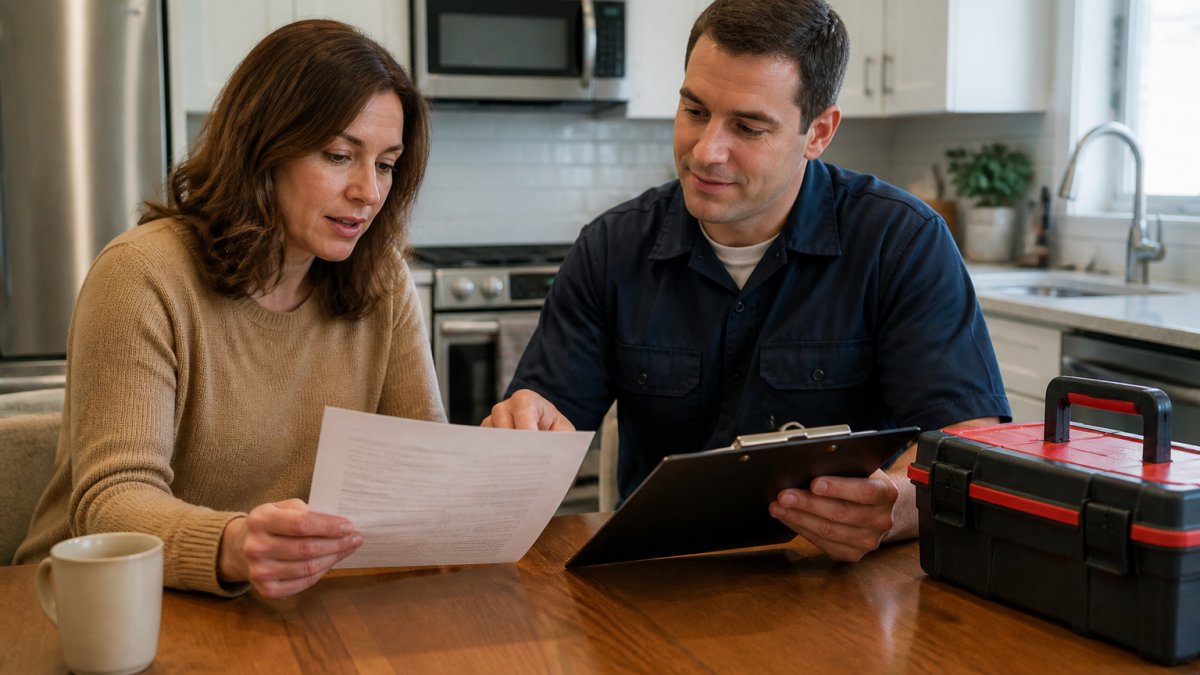
Ask for the license number and confirm it with your state’s licensing board. A legitimate contractor carries liability insurance and workers’ compensation, and will pull the required permit for installations and major repairs. A contractor who suggests skipping the permit is telling you exactly how they operate.
Compare Written Estimates and Spot the Exclusions
A written estimate should list equipment model numbers, labor, permit fees, and what happens if the job runs long. Watch for exclusions buried in the fine print: ductwork modifications, refrigerant charges, disposal fees, and after-hours surcharges. Two quotes that look identical on the top line often differ by hundreds of dollars once exclusions surface.
Questions to Ask an HVAC Contractor Before You Sign
The right questions reveal whether a contractor is qualified, insured, and honest about scope. Ask them before you sign, and listen for specifics rather than reassurance.
- Are your technicians licensed and background-checked, and can I see the license number?
- Will you provide a written estimate with model numbers and exclusions listed?
- Do you pull permits, and who handles the inspection?
A contractor who answers these crisply, without hedging, is usually the one worth hiring. One who dodges the warranty question is telling you something too.
HVAC Maintenance Plan Benefits: What a Service Agreement Really Covers
An HVAC maintenance plan is a service agreement that bundles scheduled tune-ups, priority scheduling, and discounts on repairs into a recurring membership. The benefits are real: preventive maintenance keeps equipment running efficiently, extends its lifespan, and helps preserve manufacturer warranties. But the plans themselves vary enormously, and the difference between a plan that pays for itself and one that doesn’t comes down to a short list of specifics you can check before you enroll.
The Economics: When a Plan Pays for Itself
A maintenance agreement is essentially prepaid service. To judge whether it’s worth the fee, compare the annual cost against what you would otherwise spend on the same work:
- Two seasonal tune-ups. Price any seasonal visits individually at your local rates and add them up.
- Priority scheduling. During a July heat wave or a January cold snap, plan members typically jump the queue. That access has real value when every other homeowner in town is calling at once.
- Repair discounts. Ask any provider for the exact discount percentage and whether it stacks with manufacturer promotions.
When comparing plans, weigh the annual fee against the maintenance you would otherwise buy, along with the priority access and repair savings you would actually use. You can also review and sign up for an Air Conditioner Preventative Maintenance Plan Plymouth.
What a Strong Agreement Includes, and What to Reject
A good agreement covers seasonal inspections, and you should look for these line items specifically:
- Clear language on what is excluded. Confirm in writing which repairs and major components the plan fee does not cover.
Ask any provider to list the tasks performed and the readings recorded for each visit, so you know exactly what the agreement delivers.
The Lifecycle-Cost Angle Most Homeowners Miss
Maintenance is not just about avoiding a breakdown. It is about total ownership cost over the life of the equipment. Regular maintenance supports efficient operation and can help equipment last longer. Many manufacturer warranties also depend on documented maintenance, so check your warranty terms.
When you compare a plan’s annual fee against those three effects, energy use, equipment lifespan, and warranty protection, the calculation is usually more favorable than the sticker price suggests. The mistake is enrolling without reading the inclusions, then discovering the plan covers the visit but not the work the visit reveals.
Before you enroll, ask for the plan document itself, not a brochure. The brochure lists benefits; the document lists exclusions. Read the exclusions first.
For a deeper look at what these agreements typically include, read the complete guide to HVAC preventative maintenance plans.
Emergency Service, Response Times, and Service-Area Limits
Emergency HVAC service means a technician is dispatched outside normal business hours to restore heating or cooling. Realistic response times depend on distance, season, and how many crews a company keeps on call, so ask for a window, not a promise.
How to Verify After-Hours Coverage Before You Need It
Do not wait for a furnace failure at 11 p.m. to find out whether the after-hours line reaches a dispatcher or a voicemail box. Test it during business hours:
- Call the after-hours number and ask who answers. A genuine emergency operation routes to a live dispatcher or an on-call technician. A recording that says “leave a message and we’ll call you back” is a different level of service.
- Ask how many crews are on call. A company with one on-call technician covers a smaller emergency load than one with several. Ask how calls are triaged when demand spikes.
- Ask for the response window in writing. “Same day” and “within four hours” are different commitments. Get the one they will stand behind.
A company that answers these questions with specifics, crew counts, dispatch process, written windows, is telling you how it actually operates. One that answers with “we’re always available” is telling you something too.
Realistic Response-Time Expectations
Response time is a function of three variables: distance from the shop, season, and on-call capacity. During a regional cold snap or heat wave, every company’s call volume spikes at once, and even a well-staffed shop will have a queue. A realistic expectation is that a local company with crews on call can often reach you the same day for a true emergency, while a national dispatch line may route your ticket to whichever franchise territory accepts it, which can add hours before a technician is even assigned.
Ask specifically: “If I call at 10 p.m. in January with no heat, what happens, and when should I expect a technician?” The answer should be a process, not a slogan.
A company that promises a guaranteed arrival time without asking about your location, the season, or the nature of the failure is overpromising. Distance and demand are real constraints; a credible contractor will name them.
Service-Area Limits and the Reach-vs-Capacity Trade-off
Service-area limits matter more than most homeowners expect. A company that covers a wide territory may have longer drive times to your address, while a tightly focused shop can often arrive faster. The trade-off is real: broad reach versus capacity. A wide footprint can mean more inventory and more crews, but it can also mean your address is at the edge of the route and your call is scheduled around closer jobs.
Confirm three things before you rely on a company in a crisis:
- Your town is inside the service area, not just near the border on the map.
- Emergency coverage extends to your address, not only standard business-hours service.
- Parts access matches your equipment. A shop with common parts on hand can complete more repairs on the first visit.
For urgent heating failures, our guide on emergency heating repair walks through what to do first.
When a Larger HVAC Provider May Be the Better Choice
A larger provider can be the better choice for complex commercial HVAC systems, multi-building portfolios, or projects requiring specialized equipment and engineering support.
Smaller local shops shine on residential HVAC and routine commercial maintenance, where familiarity and responsiveness matter more than fleet size. The honest answer is that the right choice depends on the job.
Match the provider to the project, not the other way around.
Get an Instant Quote from a Local HVAC Team
The gap between a good HVAC experience and a bad one usually comes down to vetting.
At Clayton McKay, we’ve built our reputation on exactly that kind of transparency.
Get an instant quote from Clayton McKay and put a licensed local team on your side. Before you request it, check the Mass Save Rebates Financing Plymouth Massachusetts page for rebates and financing options.
Frequently Asked Questions
What are the benefits of hiring a local HVAC contractor?
A local HVAC contractor typically offers faster response times because technicians are already in your service area, and they know the regional climate, local codes, and permit requirements that affect your system. You also get direct accountability: the owner lives and works in the same community, so reputation matters. Local firms often provide personalized service, familiar technicians, and maintenance plans like a Comfort Plus+ membership that include priority scheduling and savings on repairs.
How do I compare HVAC quotes and spot hidden exclusions?
Ask for a written estimate that itemizes equipment, labor, permits, and disposal fees. Check whether the quote includes refrigerant, ductwork modifications, or electrical work, since these are common exclusions. Confirm the warranty terms and whether the price covers a diagnostic service call. Get at least two or three quotes, and compare the scope line by line rather than the bottom-line number. A transparent provider will explain what is and is not included before you sign.
Do local HVAC contractors offer emergency service?
Many local HVAC contractors offer emergency service, especially during peak heating and cooling seasons. Response times depend on service-area limits and technician availability, so ask upfront what a realistic arrival window looks like for your address. Confirm whether emergency calls carry a premium rate and whether maintenance plan members get priority.
What should an HVAC maintenance plan include?
A solid maintenance plan should clearly list the tasks it covers. Look for priority scheduling and discounts on repair costs. Ask whether the plan maintains manufacturer warranties and what the cancellation terms are.
The difference between a smooth HVAC repair and a costly repeat visit is usually the contractor you chose, not the equipment. Clayton McKay brings licensed plumbers, electricians, and certified HVAC technicians together under one roof, with priority response and maintenance through Comfort Plus+. Get started with Clayton McKay and get your heating and cooling handled by a team that lives where you live.



Leave A Comment