

Last Updated: November 19, 2026
Quick Summary
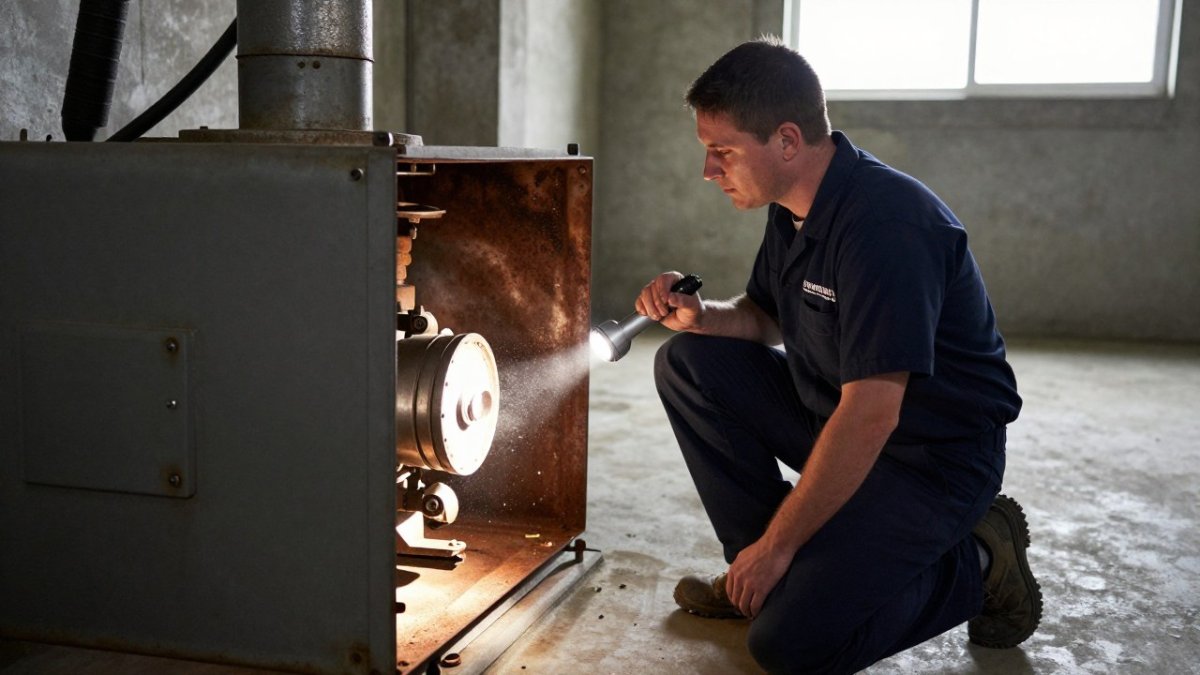
A furnace inspection pays off through lower risk, lower bills, and fewer breakdowns, since a technician checks for carbon monoxide leaks, cracked heat exchangers, and blocked flues while improving efficiency and longevity. Small problems caught early stay small, while ignored ones turn into premature replacement.
- A furnace inspection checklist records everything tested, cleaned, and adjusted during a technician’s visit.
- Gas furnaces require combustion testing, heat exchanger inspection, and flue verification as safety-critical steps.
- Replace the air filter every one to three months as part of your homeowner maintenance checklist.
- A cracked heat exchanger can leak carbon monoxide and is never a DIY job.
- Book your furnace inspection before heating season starts, not during the first cold snap.
Table of Contents
- Why an Annual Furnace Inspection Pays Off
- What a Furnace Inspection Checklist Covers
- How Much Does a Furnace Inspection Cost?
- Furnace Inspection and Cleaning: Why Both Matter
- Your Gas Furnace Maintenance Checklist for Safety
- DIY Checks vs. Work That Needs a Licensed Technician
- How to Judge the Recommendations After an Inspection
- Book Your Annual Furnace Inspection with Clayton McKay
- Frequently Asked Questions
Why an Annual Furnace Inspection Pays Off
A furnace inspection is a yearly safety and performance check of your heating system, and it pays off in three ways: lower risk, lower bills, and fewer breakdowns. At Clayton McKay, we have serviced heating systems across Plymouth, the South Shore, and Cape Cod since 1973.
- Safety. A technician checks for carbon monoxide leaks, cracked heat exchangers, and blocked flues.
- Efficiency. A dirty burner or clogged filter forces the system to work harder than it should.
- Longevity. Small problems caught early stay small. Ignored ones turn into premature replacement.
A common mistake is skipping service in a mild year. Is an HVAC maintenance membership worth it for making ongoing inspections more affordable? Furnaces degrade from disuse too, and rust and debris do not wait for a cold snap.
The U.S. Environmental Protection Agency’s guidance on home heating safety treats combustion appliance maintenance as a core part of indoor air quality. That framing matters more than most homeowners realize.
What a Furnace Inspection Checklist Covers
A furnace inspection checklist is a technician’s step-by-step record of everything tested, cleaned, and adjusted during a visit. It is the difference between a real tune-up and a quick glance.
Before the visit: what to expect
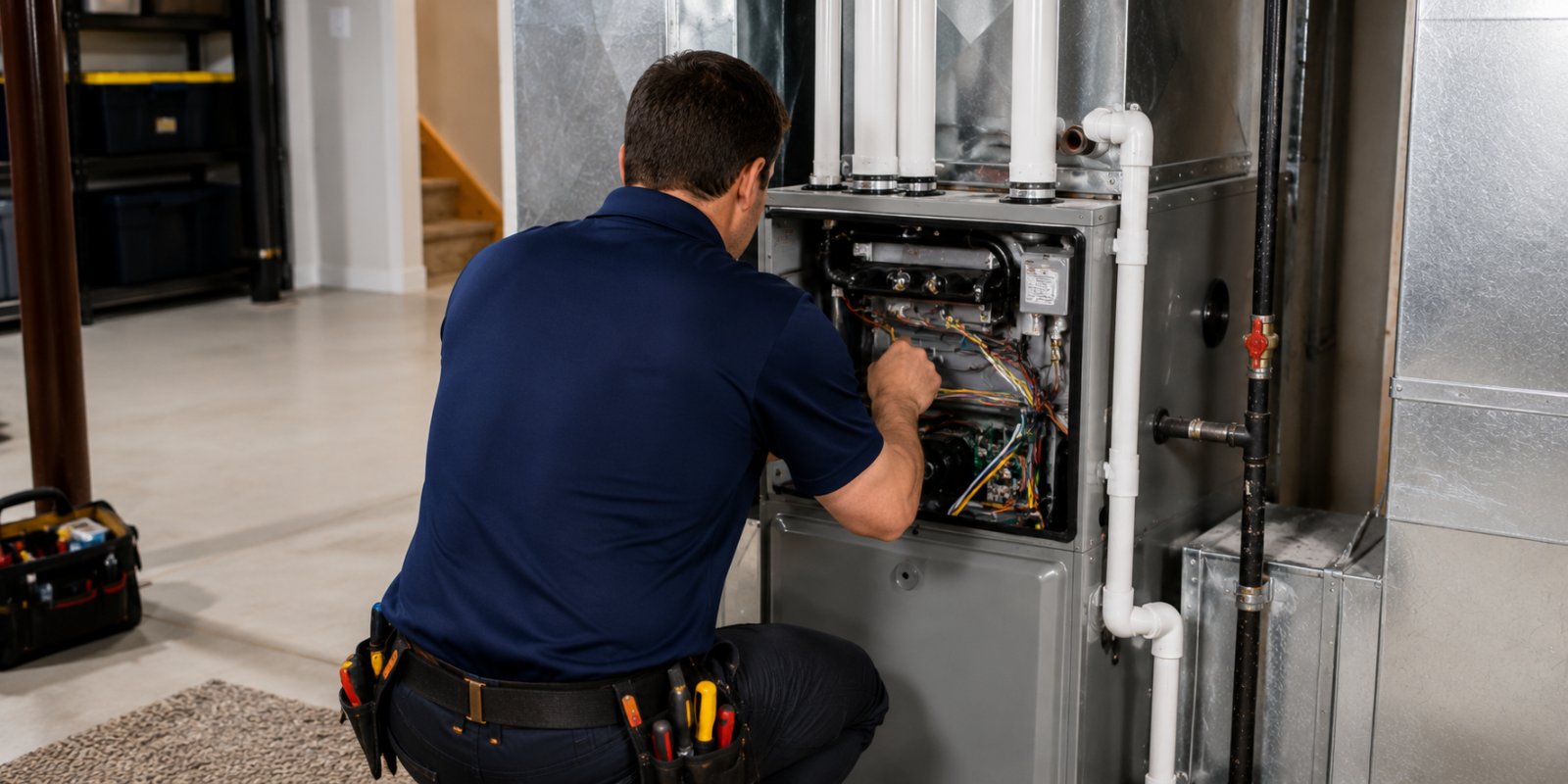
A professional visit usually starts with a short intake conversation: how the system has been behaving, odd sounds or smells, and when the filter was last changed. Have your model and serial number handy, clear a path to the unit, and set out prior service records, they shorten the diagnostic phase and help spot recurring issues.
The inspection sequence, step by step
- Visual and safety survey. The technician checks the area around the unit, confirms the flue and venting are connected and undamaged, and looks for corrosion, moisture, or debris.
- Filter and airflow. The filter is inspected and replaced if needed, and the blower compartment is checked for obstructions. Airflow restrictions are a common cause of efficiency loss.
- Burner and ignition. On a gas system, the burner assembly and flame sensor are cleaned, and the ignition system is tested to confirm the flame lights and holds.
- Combustion analysis. After cleaning, the technician measures how cleanly the burner burns fuel. Testing a dirty burner tells you nothing useful, which is why this step comes after cleaning.
- Heat exchanger inspection. The technician looks for cracks or corrosion that could leak carbon monoxide into the living space. This requires disassembly and proper tools, and it is the check you should never let a technician skip.
- Electrical connections and safety controls. Connections are tightened and tested, and safety switches are confirmed to function.
- Flue and venting. Exhaust is confirmed to leave the home safely, with no blockages or backdrafts.
- Condensate drain. On high-efficiency units, the drain line is cleared to prevent water damage and shutdowns.
- Thermostat calibration. The set point is checked against actual performance so the system cycles as intended.
- Final combustion and performance reading. The technician re-tests after all adjustments and records the results.
What changes by system type
A gas furnace, an electric furnace, and a heat pump do not need identical work, and a checklist that treats them the same is a red flag.
- Gas furnaces require combustion testing, heat exchanger inspection, and flue verification. These are the safety-critical steps.
- Electric furnaces have no combustion step, so the focus shifts to heating elements, sequencers, electrical connections, and airflow.
- Heat pumps add refrigerant and coil checks, reversing valve testing, and defrost cycle verification on top of the electrical and airflow work.
If your technician hands you a generic checklist that does not reflect your system type, ask why.
After the visit: what you should receive
A thorough visit ends with documentation. Ask for a written record of the visit and any recommendations, and keep it for your own files.
How Much Does a Furnace Inspection Cost?
Furnace inspection cost depends on your system type, its age, and whether the visit includes a full cleaning. Pricing depends on your system type, its condition, and what the visit includes. Instead, here is a transparent framework for judging whether annual service is worth it.
What drives the number up or down:
- System type. Gas furnaces need combustion testing. Heat pumps need refrigerant and coil checks, which take longer.
- Condition. A neglected unit takes longer to clean and test than one that has been serviced annually.
- Add-ons. Ductwork inspection, a thermostat swap, or a zone-control check adds time and cost.
- Membership. A maintenance plan spreads the cost across the year and bundles priority service.
A cost-versus-risk framework
Rather than promising guaranteed savings, think in terms of risk. Annual service is best understood as insurance against three expensive outcomes:
- A mid-winter emergency call. A failure during a cold snap can mean both a repair bill and an urgent service call.
- A preventable repair. A dirty flame sensor or a clogged condensate line is easier to address during a routine visit than after it has caused a shutdown or water damage.
- Premature replacement. Ignored problems shorten equipment life, and a furnace replaced years early is the largest cost of all.
The honest limit: not every dollar spent on maintenance comes back as a dollar saved. A well-maintained furnace can still fail, and a neglected one can sometimes run for years. The case for annual service is strongest when you weigh the cost of the visit against the cost of the failures it makes less likely.
Questions to ask before you book
- Does the price include a combustion analysis, or is that an add-on?
- Is the heat exchanger inspection included, or only a visual glance?
- Will I receive a written checklist with readings?
- Is there a separate charge for after-hours or weekend visits?
- If a repair is recommended, is the diagnostic fee credited toward it?
When comparing inspection offers, look at what is actually included, not just the headline number.
For current pricing, request a quote and we will give you an accurate figure for your system. Our breakdown of preventative maintenance plans explains the options.
Furnace Inspection and Cleaning: Why Both Matter
Furnace inspection and cleaning are two halves of one job. Inspection finds the problem; cleaning prevents the next one.
According to the U.S. Department of Energy’s guidance on home heating efficiency, routine maintenance is one of the simplest ways to keep heating costs down. The cleaning step is where most of that savings comes from.
Your Gas Furnace Maintenance Checklist for Safety
A gas furnace maintenance checklist for homeowners is shorter than the technician’s version, but it matters just as much.
Your homeowner gas furnace maintenance checklist:
- Test carbon monoxide detectors monthly and replace batteries twice a year.
- Replace the air filter every one to three months.
- Keep the area around the furnace clear of boxes and clutter.
- Check that the flue pipe is connected and undamaged.
- Listen for odd sounds: banging, rumbling, or squealing.
- Watch the flame color. A steady blue flame is normal; yellow or flickering is a call to a technician.
- Confirm vents in every room are open and unblocked.
If you smell gas, leave the house and call from outside (Recognizing and Responding to Pipeline Emergencies | Stakeholder Communications). Do not hunt for the leak yourself.
For a wider year-round list, our homeowner HVAC maintenance checklist covers cooling season too. And if your system is blowing cold air instead of heat, that symptom has its own guide before you call anyone.
DIY Checks vs. Work That Needs a Licensed Technician
Some furnace tasks are safe for a homeowner. Others are genuinely dangerous, and the line between them is not blurry.
Safe to do yourself:
- Replacing the air filter.
- Testing carbon monoxide and smoke detectors.
- Clearing clutter and opening vents.
- Booking the annual visit.
For gas lines, burner work, and electrical connections, call a licensed technician.
The heat exchanger is the one to respect.
A common mistake is tightening or adjusting gas fittings to “fix” a smell. That is how small leaks become emergencies.
How to Judge the Recommendations After an Inspection
An inspection ends with a list of recommendations, and this is where homeowners feel the most pressure. Use a simple filter before you agree to anything.
Ask three questions about every recommendation:
- Did the technician show me the problem? A photo or a reading on a meter is proof. A verbal claim is not.
- Is it urgent or routine? Safety issues and failed parts are urgent. Efficiency upgrades can usually wait.
- Is it repair or replace? On an older furnace, a large repair bill may not be worth it. On a newer furnace, repair almost always wins.
Here is a quick decision framework:
| Situation | Recommended Move |
|---|---|
| Cracked heat exchanger | Replace or repair before next heating season |
| Dirty but working burner | Clean and retest |
| Failed flame sensor | Replace the part, low urgency |
| Older furnace, major repair | Get a replacement quote and compare |
| Newer furnace, any repair | Repair and keep the warranty intact |
Keep every inspection report. Maintenance records protect your manufacturer warranty and matter if you ever file an insurance claim. If a recommendation does not come with a clear reason, ask for one in writing.
Book Your Annual Furnace Inspection with Clayton McKay
At Clayton McKay, our certified HVAC technicians handle furnace service. Our Comfort Plus+ membership includes preventative maintenance, preferred scheduling, and priority rapid response.
We are a family-owned business, and we have served this region since 1973.
As one customer, Doret Phillip, put it, “The technician was experienced, professional and friendly he explained what needed to be done.”
Book your annual furnace inspection and get ahead of the season.
Frequently Asked Questions
Are annual furnace inspections really necessary?
They are for most homes with a gas or oil furnace. An annual furnace inspection catches cracked heat exchangers, blocked flues, and failing safety controls before they become carbon monoxide risks, and it keeps small issues from turning into emergency repairs mid-winter. Manufacturers also tie warranty coverage to documented yearly service, so skipping it can cost you coverage on a part that fails. If your system is electric or a heat pump, the interval may stretch, but yearly checks still protect efficiency and lifespan.
How often should you get a furnace inspection?
Once a year, ideally in early fall before the heating season starts. Gas and oil furnaces should be serviced annually because combustion, venting, and the heat exchanger need a trained eye. Heat pumps and electric furnaces can often go a year between visits as well, though some technicians suggest a check every 12 months regardless of fuel type. If your system is older, has had repeated repairs, or you have not serviced it in several years, book a visit now rather than waiting for the first cold snap.
How much should a furnace inspection cost?
Pricing depends on your system type, its condition, and what the visit includes, so ask for a quote rather than relying on a national average. A stand-alone inspection and tune-up usually sits in a modest range, while a first visit on a neglected system can run higher because it takes longer to clean and test. Membership plans often bundle the annual visit with priority scheduling and repair discounts, which can lower the effective cost. Request an itemized quote so you know what is covered.
Can annual furnace maintenance help prevent breakdowns?
Yes. Most winter no-heat calls trace back to something a technician would have flagged months earlier: a dirty flame sensor, a worn blower motor bearing, a clogged filter, or a condensate drain that clogs in cold weather. During a furnace inspection and cleaning visit, those parts get tested, cleaned, or lubricated before they fail. That does not make breakdowns impossible, but it shifts the odds in your favor and means fewer emergency repairs on the coldest night of the year.


Leave A Comment