

Quick Summary
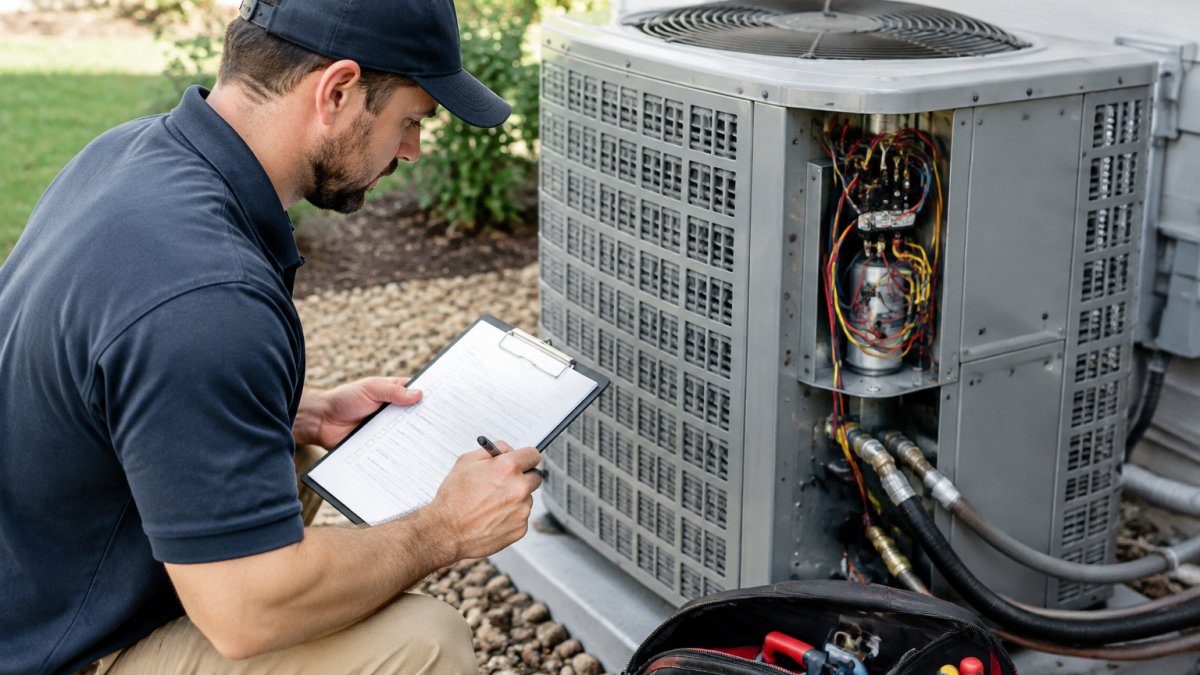
An HVAC maintenance checklist for homeowners in 2026 breaks system care into monthly, seasonal, and annual tasks. Homeowners handle filters, thermostat tests, and outdoor clearance, while licensed technicians handle electrical, refrigerant, and gas work.
- Check or replace the air filter monthly during heavy use and write the date on the frame.
- Clear leaves and debris at least two feet from the outdoor condenser before cooling season.
- Test heating and cooling modes each spring and fall to confirm the system responds.
- Keep a dated log of filter changes and service visits to support warranty claims.
- Have a licensed technician handle refrigerant, gas, electrical, and heat exchanger checks annually.
Table of Contents
- Why an HVAC Maintenance Checklist Prevents Costly Breakdowns
- Monthly HVAC Maintenance Tasks You Can Do Yourself
- Seasonal HVAC Maintenance Checklist for Spring and Fall
- Outdoor Condenser Clearance, Supply Vents, and Coil Care
- Professional HVAC Tune-Up Checklist: What a Technician Should Verify
- Printable HVAC Maintenance Checklist and Records Tracker for 2026
- Scheduling Your Next HVAC Tune-Up with Clayton McKay
- Frequently Asked Questions
Why an HVAC Maintenance Checklist Prevents Costly Breakdowns
Last Updated: November 12, 2026
Most HVAC failures build slowly: a clogged filter, dirty coil, or loose connection strains a system for months before failing on the hottest or coldest day. An HVAC maintenance checklist for homeowners in 2026 turns that decline into a short, repeatable routine.
A checklist removes guesswork: monthly checks catch airflow problems early, seasonal checks prepare the system for heavy use, and annual professional service verifies what homeowners cannot safely inspect, such as electrical connections and gas or oil components. To understand how structured plans prevent breakdowns, read the deeper guide on preventative maintenance plans.
Keeping records also matters. A dated log showing filter changes and service visits helps a technician diagnose problems faster and can support warranty claims when a manufacturer asks for proof of maintenance.
Monthly HVAC Maintenance Tasks You Can Do Yourself
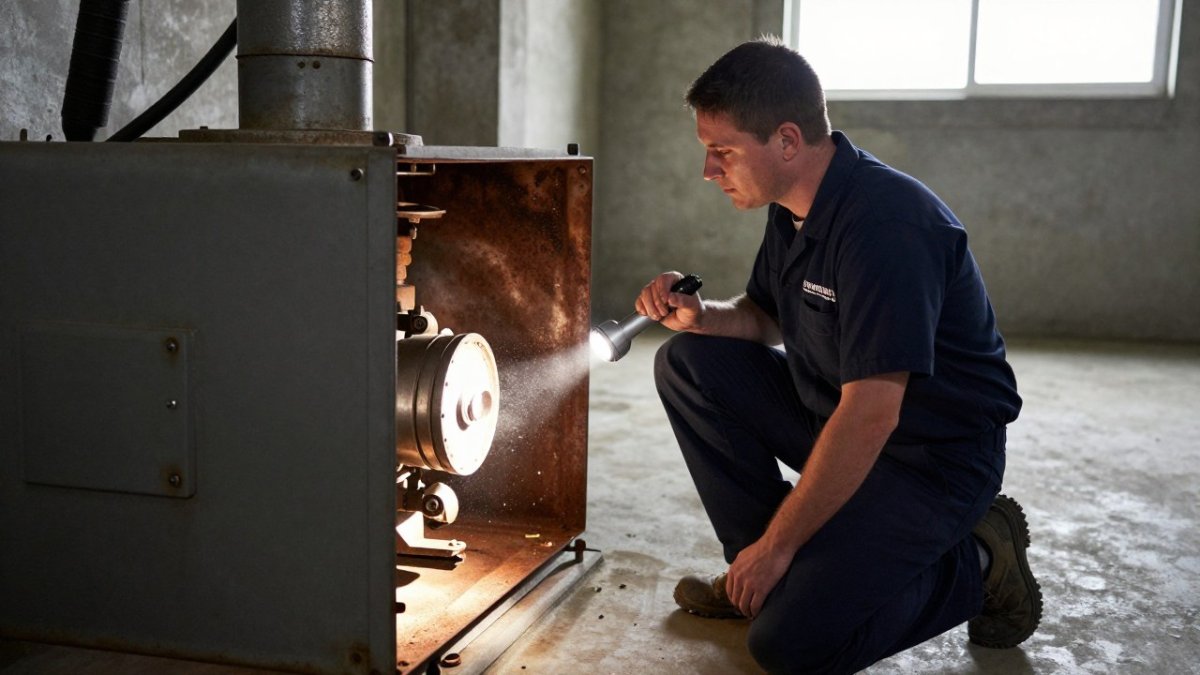
Most monthly tasks take under fifteen minutes and need only a flashlight. Start with the filter and thermostat, then walk the perimeter of your outdoor unit. A phone calendar reminder keeps these tasks from slipping.
Before you begin, switch the system off at the thermostat. Working around a running blower or an energized outdoor fan is how minor maintenance turns into an injury.
Checking and Replacing the Air Filter
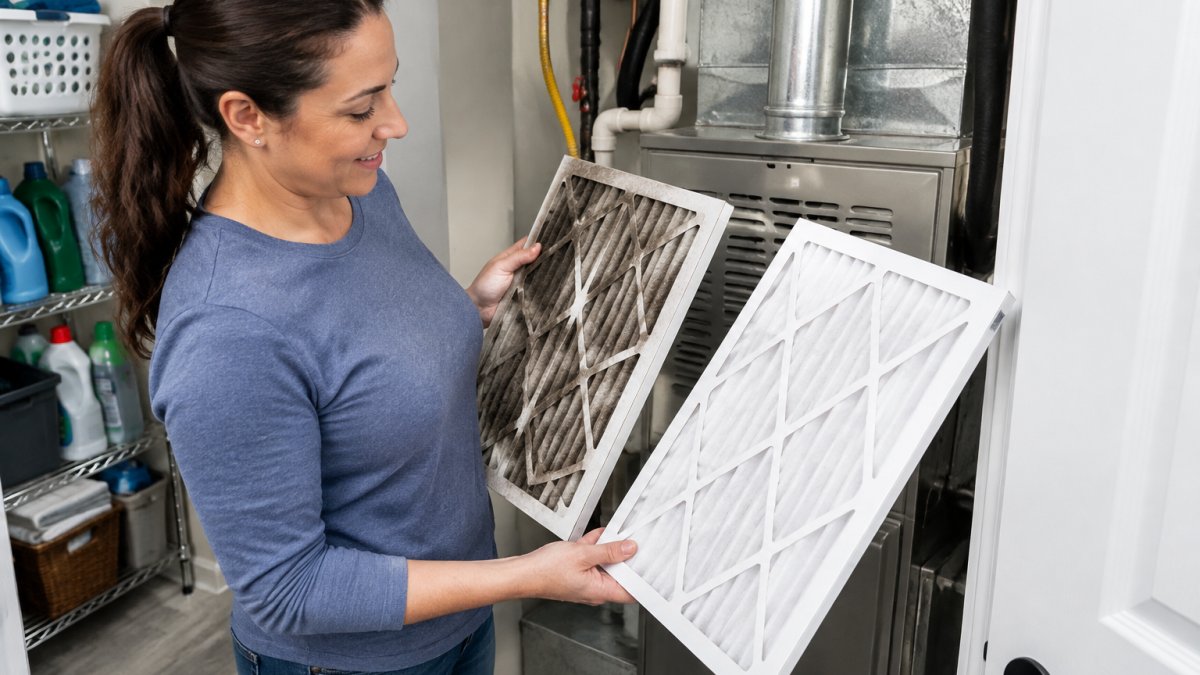
The air filter is the single most important monthly task. A restricted filter forces the blower to work harder, reduces airflow across the evaporator coil, and raises utility bills. For a clear answer on how often to change your furnace filter, follow that guidance.
Always confirm the airflow arrow on the new filter points toward the blower, and match the filter size printed on the old one exactly.
Setting and Testing Thermostat Operation
Confirm the thermostat is set to the intended mode, heating or cooling, and that the fan setting matches your preference. Test it by raising the setpoint a few degrees in cooling mode and confirming a response within a few minutes. If batteries power your thermostat, replace them on a fixed schedule rather than waiting for a low-battery warning.
Seasonal HVAC Maintenance Checklist for Spring and Fall
Seasonal preparation shifts focus from filters to readiness: spring prepares the cooling side, fall the heating side. Tasks below are labeled by who should perform them: Homeowner tasks are safe with basic tools; Technician tasks involve electricity, refrigerant, gas, or combustion and belong to a licensed professional.
Spring Preparation (Before Cooling Season)
| Task | Who | Why It Matters |
|---|---|---|
| Replace the air filter and write the date on the frame | Homeowner | A loaded filter restricts airflow and raises energy use before the first heat wave. |
| Clear leaves, grass clippings, and stored items at least two feet from the outdoor condenser | Homeowner | Restricted airflow forces the compressor to work harder and can shorten its life. |
| Rinse condenser fins gently with a garden hose from the outside in | Homeowner | Dust and pollen insulate the coil; a gentle rinse restores heat rejection. |
| Confirm all supply and return vents are open and unobstructed | Homeowner | Closed registers create pressure imbalances and uneven room temperatures. |
| Run the system in cooling mode for 10-15 minutes and listen for unusual noises or short cycling | Homeowner | Early detection of a failing capacitor or low refrigerant avoids a mid-summer breakdown. |
| Test the condensate drain by pouring a cup of water into the pan and confirming it drains freely | Homeowner | A clogged drain line can overflow and damage ceilings or floors. |
| Check the outdoor disconnect box for obvious damage or insect nests | Homeowner (visual only) | Do not open the box; report any damage to a technician. |
| Measure supply-air temperature split against the manufacturer’s specification | Technician | Verifies refrigerant charge and airflow without guessing. |
| Inspect and clean the evaporator coil | Technician | A dirty indoor coil reduces capacity and can freeze the system. |
| Check refrigerant pressures and inspect for leaks | Technician | Low charge or a leak requires certified handling under EPA rules. |
Fall Preparation (Before Heating Season)
| Task | Who | Why It Matters |
|---|---|---|
| Replace the air filter and note the date | Homeowner | Heating season puts the same airflow demands on the blower. |
| Test heating mode and confirm warm air at supply vents within a few minutes | Homeowner | A delayed or weak response can signal a failing igniter or blower. |
| Inspect visible ductwork for loose joints, gaps, or disconnected sections | Homeowner (visual only) | Leaky ducts waste conditioned air and can pull in attic or crawlspace air. |
| Vacuum return grilles and wipe supply vent covers | Homeowner | Dust buildup restricts airflow and circulates allergens. |
| Test carbon monoxide detectors near fuel-burning equipment and replace batteries | Homeowner | CO is odorless and can be produced by a cracked heat exchanger (Inspect Home Furnace System For Hazards, Carbon Monoxide). |
| Keep the area around the furnace clear of stored items and flammable materials | Homeowner | Combustion air needs clearance; stored items are a fire risk. |
| Listen for unusual sounds (banging, screeching, rumbling) at startup | Homeowner | A screeching belt or rumbling burner often precedes a failure. |
| Inspect the heat exchanger for cracks or corrosion | Technician | A cracked heat exchanger can leak carbon monoxide into the home. |
| Test gas connections, burners, and safety controls | Technician | Combustion safety requires specialized instruments and licensing. |
| Lubricate moving parts and check blower motor operation | Technician | Proper lubrication reduces friction and extends motor life. |
System-Specific Seasonal Notes
- Heat pump: In spring, test both cooling and heating modes because the reversing valve must switch correctly. In fall, confirm the outdoor unit defrost cycle runs without ice buildup. Homeowners can clear snow and leaves from the top and sides, but refrigerant checks belong to a technician.
- Furnace: In fall, replace the filter and confirm the blower runs. Do not open the burner compartment; gas smell or a yellow, lazy flame warrants an immediate call to a technician.
- Boiler: In fall, check the pressure gauge against the manufacturer’s stated range and bleed radiators if they are cold at the top. Water leaks or pressure loss require a technician.
When to Stop and Call a Technician
Stop and call a licensed technician if you notice any of the following during seasonal checks:
- Smell of gas near a furnace, boiler, or water heater, leave the area and call your gas utility or emergency services from a safe location.
- Burning or metallic smell from vents, shut the system off at the thermostat and call for service.
- Repeated short cycling (system turns on and off every few minutes), often a sign of an oversized system, low refrigerant, or a failing sensor.
Homeowners who complete and document the homeowner-level seasonal tasks tend to catch small issues before they become emergency calls. Schedule technician-level tasks once a year, ideally in spring for cooling and fall for heating, so the system is verified before its heaviest workload.
Outdoor Condenser Clearance, Supply Vents, and Coil Care
The outdoor condenser needs open airflow to reject heat. Keep shrubs, stored items, and grass clippings clear of the unit.
Check each supply and return vent; furniture, rugs, and closed registers restrict airflow and cause uneven temperatures.
Coil cleaning is generally a professional task. The evaporator coil sits inside the air handler and the condenser coil outdoors, and both need careful cleaning with the correct products.
Professional HVAC Tune-Up Checklist: What a Technician Should Verify
Some tasks belong to a licensed professional: electrical work, refrigerant handling, and gas or oil connections carry safety and legal requirements most homeowners should not attempt. A thorough annual tune-up should include the items below, and you should ask the technician to note each one on a written report that becomes part of your maintenance records and can support warranty claims. You can also book a heating system maintenance service to arrange a professional visit.
What a Thorough Tune-Up Covers
| Check | What It Reveals | Why It Matters to You |
|---|---|---|
| Measure electrical voltage, amperage, and capacitor condition | Whether the compressor and fan motors are drawing normal current | A failing capacitor is a common cause of a no-cool or no-heat call and is inexpensive to replace during a tune-up. |
| Check refrigerant pressures and inspect for leaks | Whether the system is properly charged | Low charge reduces capacity and can freeze the indoor coil; refrigerant handling requires EPA certification. |
| Inspect and clean the evaporator and condenser coils | How much dirt is insulating the coils | Dirty coils reduce efficiency and can shorten compressor life. |
| Test gas or oil connections, burners, and safety controls | Combustion safety and efficiency | A cracked heat exchanger or blocked flue can produce carbon monoxide. |
| Lubricate moving parts and check blower motor operation | Bearing wear and airflow | Proper lubrication reduces friction and extends motor life. |
| Verify thermostat calibration and control wiring | Whether the system responds to setpoints correctly | A miscalibrated thermostat causes comfort complaints and wasted energy. |
| Measure airflow and inspect ductwork for leaks | Static pressure and duct leakage | Restricted or leaky ducts waste conditioned air and cause hot or cold rooms. |
| Test the condensate drain and safety switch | Whether water will back up | A clogged drain can overflow and damage ceilings or floors. |
| Check the outdoor disconnect and electrical connections for tightness | Loose connections that can arc or overheat | Loose lugs are a fire risk and a common source of intermittent failures. |
Homeowner Tasks vs. Technician Tasks: Where to Draw the Line
Use this rule of thumb: if a task requires opening a panel that exposes electrical connections, handling refrigerant, adjusting gas or oil components, or working inside the combustion chamber, it is a technician task.
Watch out: Do not remove the furnace burner cover or the air-handler electrical panel to “take a look.” Capacitors can hold a dangerous charge after power is off, and gas components can leak if disturbed.
How to Evaluate a Maintenance Plan
Many contractors offer annual maintenance plans, sometimes called service agreements or memberships, that may bundle tune-ups with scheduling and repair benefits. When comparing plans, ask:
- What is included in the tune-up? Ask for the written checklist the technician will follow, not just a promise of “a full inspection.”
- How many visits per year, and when? A plan with one visit may leave the heating or cooling side unchecked for a full year.
- What is the response-time commitment for members? Priority scheduling is the main practical benefit during a heat wave or cold snap.
The value of a maintenance plan depends on actually using the visits it includes. Do not buy a plan and skip the appointments.
Warranty Documentation
Manufacturers often require proof of maintenance to honor warranties; check your equipment documentation for requirements. Keep the written tune-up report, invoice, and filter-change log in one folder; if you sell the home, that folder supports the system’s service history for the buyer.
What a Tune-Up Does Not Guarantee
A tune-up verifies current operation and catches many problems early, but it cannot prevent every failure; capacitors, blower motors, and control boards can fail without warning. Its value is reducing the likelihood of a mid-season breakdown and giving you a documented baseline. If a technician recommends a repair, ask for the measured reading (for example, capacitor microfarads versus the rated value) and the expected cost before approving the work.
Printable HVAC Maintenance Checklist and Records Tracker for 2026
A printed log keeps your schedule visible. Use the grid below and post it near the thermostat or furnace closet.
| Task | Frequency | Last Done | Next Due |
|---|---|---|---|
| Replace or inspect air filter | Monthly | ||
| Check thermostat operation | Monthly | ||
| Clear outdoor condenser debris | Monthly | ||
| Inspect supply and return vents | Monthly | ||
| Spring cooling preparation | Annually, spring | ||
| Fall heating preparation | Annually, fall | ||
| Professional tune-up | Annually | ||
| Carbon monoxide detector test | Annually |
Keep receipts and service reports in one folder. A complete record helps with warranty claims and makes it easier to compare system performance year to year.
Scheduling Your Next HVAC Tune-Up with Clayton McKay
If your checklist shows a professional visit is due, the simplest next step is to book one. Clayton McKay’s licensed technicians provide professional service for HVAC systems; contact us for current availability and scope. Our Comfort Plus+ membership program is designed to provide priority scheduling and preventative maintenance throughout the year.
Frequently Asked Questions
What should I include on my residential HVAC maintenance checklist?
A useful residential HVAC maintenance checklist covers monthly air filter checks, thermostat settings and operation, keeping the outdoor condenser clear of leaves and debris, checking supply and return vents for blockage, and verifying that the system runs through a full heating or cooling cycle. Add seasonal items such as spring cooling-startup checks and fall heating-startup checks, and note the date of each task so you can track what was done and when. Tasks involving electrical connections, gas or oil lines, refrigerant, or coil chemical cleaning belong to a licensed professional, so mark those as scheduled service items rather than do-it-yourself steps.
How often should homeowners schedule HVAC maintenance?
Most homeowners do well with a professional tune-up once a year, with heating systems serviced in the early fall and cooling systems serviced in the spring before the first heavy use. Between professional visits, check the air filter every month during peak seasons and replace it according to the filter type and household conditions. Homes with pets, allergies, or construction dust may need more frequent filter changes. A yearly service also gives a technician the chance to inspect electrical connections, moving parts, and system performance that a homeowner cannot safely check.
When should I replace my HVAC air filter?
Replace a disposable air filter when it looks visibly dirty or clogged, and at least every one to three months during heavy-use seasons. Thicker, higher-efficiency filters often last longer, but they also restrict airflow more, so confirm the filter size and rating listed for your system. Check the filter monthly during the cooling and heating seasons. A clogged filter reduces airflow, strains the blower, and can raise utility bills, so a regular filter replacement schedule is one of the simplest maintenance habits a homeowner can keep.
Which HVAC maintenance tasks can homeowners do themselves?
Homeowners can safely handle filter checks and replacement, keeping vents and returns unblocked, clearing leaves and debris from around the outdoor condenser (with the power switched off), checking thermostat settings, and noting any unusual noises or odors. Cleaning the area around the unit and wiping visible dust from accessible grilles are also reasonable tasks. Anything involving electrical wiring, refrigerant, gas or oil connections, evaporator or condenser coil chemical cleaning, or opening sealed components should be left to a licensed HVAC technician.
Which HVAC maintenance tasks require a professional?
Tasks that require a licensed professional include electrical connection checks, capacitor and contactor testing, refrigerant level checks, gas and oil line inspection, burner and heat exchanger inspection, coil cleaning, lubrication of motors where required, and combustion testing on fuel-burning equipment. A professional also verifies system performance under load and can catch small problems before they become breakdowns. Keeping these visits on a documented schedule can also help protect manufacturer warranty requirements, so check your equipment documentation.



Leave A Comment