

Last Updated: November 10, 2026
Quick Summary
Electrical panel upgrade costs in 2026 are driven mainly by labor, permits, and utility coordination rather than the panel itself. A 100-amp-to-200-amp service upgrade typically includes the panel, breakers, service entrance conductors, meter base, grounding, labor, permit, and utility work, so you should compare itemized quotes that match the same scope.
- Labor is the largest variable and scales with how hard your house makes the job.
- A same-capacity swap covers the panel, breakers, grounding, labor, and permit, but not the meter base or service entrance conductors.
- Every panel change requires a permit and an inspection in most jurisdictions, and fees vary by town.
- A common timeline is a two-to-four-week window from permit issuance to final reconnect, with utility visits as the pinch points.
- Ask whether the utility will need to review the service drop or transformer before work starts.
Table of Contents
- What Drives Electrical Panel Upgrade Costs in 2026
- Cost to Upgrade an Electrical Panel to 200 Amps
- Cost to Upgrade an Electrical Panel From 150 to 200 Amps
- Replacement vs. Service Upgrade: Comparing Scopes Apples to Apples
- Using an Electrical Panel Upgrade Cost Calculator
- Electrical Panel Upgrade Tax Credit 2026: What May Apply
- Utility Fees, Service-Line Work, and Scheduling Delays
- How to Read a Contractor Quote and Spot Red Flags
- Frequently Asked Questions
What Drives Electrical Panel Upgrade Costs in 2026
Electrical panel upgrade costs in 2026 come down to one uncomfortable truth: the box on your basement wall is rarely the expensive part. Before pricing matters, find out whether you even need a panel upgrade.
A panel upgrade replaces your existing breaker panel with one that has higher capacity, new breakers, and modern safety features. A service upgrade goes further: panel plus meter base, service entrance conductors, and the utility connection.
Labor, Materials, and the Hidden Line Items
Labor is the largest variable and scales with how hard your house makes the job. A panel in a finished basement with clear access takes far less time than one buried behind drywall in a crawlspace. Materials include the panel, main breaker, branch breakers, grounding and bonding components, and feed wire.
The hidden line items are where budgets break:
- Replacing undersized or aluminum service conductors
- Adding a grounding electrode system that meets current code
- Relocating the panel to create required working clearance
Ask any contractor to list these separately. A quote that lumps them into one number is hiding something.
A Transparent, Itemized Sample Estimate
Broad ranges are useless when three quotes differ by thousands of dollars. You need a line-by-line breakdown you can map onto each bid. Below is a realistic sample estimate for a 100-amp-to-200-amp service upgrade in a single-family home with a finished basement and an existing overhead service drop. Treat the dollar figures as illustrative placeholders for your market, not a quote for your house.
| Line Item | What It Covers | Sample Amount (USD) |
|---|---|---|
| 200-amp panel and main breaker | Load center, main breaker, cover | $450-$900 |
| Branch circuit breakers | AFCI/GFCI breakers for existing circuits | $250-$600 |
| Service entrance conductors | New conductors from meter to panel | $300-$800 |
| Meter base and disconnect | New meter socket, exterior disconnect | $250-$550 |
| Grounding and bonding | Ground rods, electrode conductor, bonding | $200-$500 |
| Electrician labor | Removal, installation, load calculation | $1,800-$3,500 |
| Permit and inspection | Local permit fee, inspection scheduling | $150-$500 |
| Utility coordination | Disconnect/reconnect, meter work | $100-$600 |
| Drywall patch and paint | Access and finish repair | $150-$500 |
| Contingency | Unforeseen code or access issues | 10-15% of subtotal |
Matching Scopes Before You Compare Prices
A same-capacity panel replacement, a 100A-to-200A upgrade, a service entrance upgrade, and a 200A-to-400A upgrade are four different projects. A same-capacity swap covers the panel, breakers, grounding, labor, and permit. A 100A-to-200A upgrade adds service entrance conductors and often a meter base. A full service entrance upgrade adds utility coordination and may require a new mast, weatherhead, and exterior disconnect. A 200A-to-400A upgrade can require a larger service drop, a new meter enclosure, and sometimes a utility transformer review.
When you compare bids, put each contractor’s scope next to the table above and mark which lines are included, excluded, or assumed. A low bid that omits the meter base or grounding electrode is not a bargain; it is an incomplete job that will surface as a change order.
Permits, Inspections, and Code Compliance
Every panel change requires a permit and an inspection in most jurisdictions, and the fees vary by town. Code compliance is the bigger cost driver.
The National Fire Protection Association’s guidance on electrical safety explains why these rules exist, and local inspectors enforce them strictly. Budget for the inspection to fail the first time only if your contractor cut corners.
Sample estimate line items for a 100-amp-to-200-amp service upgrade
Cost to Upgrade an Electrical Panel to 200 Amps
A 200-amp panel is the standard upgrade for most modern homes and the one homeowners ask about most. The cost to upgrade an electrical panel to 200 amps depends on the scope of work, and pricing depends on the work your home requires.
Here is how we would break down the decision:
| Your Situation | Likely Scope | What Drives Cost |
|---|---|---|
| 100-amp panel, service wires adequate | Panel replacement only | Panel, breakers, labor, permit |
| 100-amp panel, undersized service | Full service upgrade | Panel, meter base, conductors, utility coordination |
| 150-amp panel, modern load | Same-capacity or modest bump | Panel, breakers, inspection |
| Adding EV charger or heat pump | Load calculation first | May require 200-amp or 400-amp service |
For an accurate number on your home, request an electrical panel upgrade quote from Clayton McKay’s website.
Cost to Upgrade an Electrical Panel From 150 to 200 Amps
The cost to upgrade an electrical panel from 150 to 200 amps depends on whether the existing service entrance wiring is already sized for the higher load.
A 150-amp panel was common in homes built during a specific era, and the service conductors may or may not support 200 amps. Your electrician has to run a load calculation and inspect the conductors before quoting.
Replacement vs. Service Upgrade: Comparing Scopes Apples to Apples
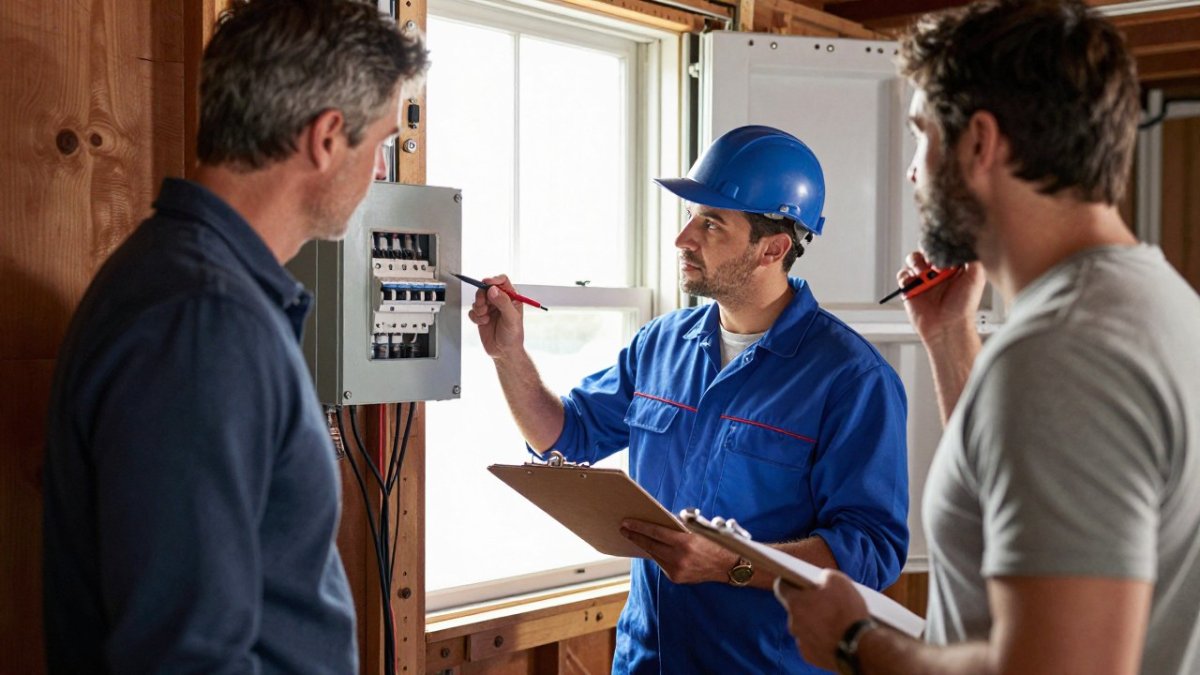
Comparing quotes without matching scopes is the most common mistake we see. Before you compare anything, check whether your home shows the signs that warrant an upgrade, and confirm how long your existing panel has been in service with this guide on how long a home electrical panel usually lasts.
Same-Capacity Replacement
A same-capacity replacement swaps a failing panel for a new one of equal amperage. It covers the panel, breakers, grounding, labor, and permit. It does not touch the meter base or service entrance conductors. This is the right scope when the existing service is adequate and only the panel has failed.
Full Service Upgrade With New Service Entrance
A full service upgrade replaces the panel, meter base, and service entrance conductors, and requires utility coordination to disconnect and reconnect power. It costs more because it does more. If your goal is adding an EV charger, a heat pump, or a workshop, this is usually the scope you actually need.
Using an Electrical Panel Upgrade Cost Calculator
An electrical panel upgrade cost calculator gives a general estimate, not a quote. They are useful for setting a budget and useless for comparing contractors.
Here is how we would use one:
- Enter your current amperage and target amperage honestly
- Select whether you need a panel swap or a full service upgrade
- Add your region, since local labor rates vary widely
The calculator cannot see your crawlspace, your service conductors, or your local inspector’s interpretation of grounding rules. Those decide the real number.
Electrical Panel Upgrade Tax Credit 2026: What May Apply
Federal incentives for home electrical work change, and eligibility depends on your circumstances and the specific improvement. The U.S. Department of Energy’s guidance on home energy incentives is the authoritative source for what currently qualifies, and the IRS guidance on residential energy credits covers the tax side.
Confirm current rules with a tax professional before you count on a credit.
Utility Fees, Service-Line Work, and Scheduling Delays
The costs nobody warns you about live between your panel and the pole. Utility coordination, disconnect and reconnect fees, and service-line work can add real money and real weeks.
What most cost guides skip is the mechanism. Your utility owns the service drop and the meter, and your electrician owns everything from the meter base inward. That split decides who does what, who charges for it, and how long the job sits without power.
Who Owns What
- Utility-owned: the overhead or underground service drop from the pole or transformer to the service point, the meter itself, and the transformer. The utility typically performs the disconnect and reconnect and may charge a fee for each.
- Homeowner-owned: the meter base or meter enclosure, the service entrance conductors from the meter to the panel, the panel, the grounding electrode system, and the mast and weatherhead on an overhead service.
- Shared decision points: if the service drop is undersized for the new amperage, the utility may require a larger drop or a transformer review before it will reconnect. That review is the most common cause of a multi-week delay.
When Utility Involvement Adds Cost or Delay
A same-capacity panel swap often needs only a brief disconnect and reconnect. A service upgrade is different. Moving from 100 amps to 200 amps may require the utility to confirm the service drop and transformer can carry the load, schedule a crew to disconnect, and schedule a second visit to reconnect after inspection. Each visit is a scheduling event, and weather, crew availability, and inspection timing all stack up.
Common add-ons and delays include:
- Disconnect and reconnect fees, which vary by provider and are sometimes billed separately for each visit
- A service drop upgrade if the existing drop cannot carry the new amperage
- A transformer review or upgrade if the neighborhood load is near capacity
Building a Realistic Timeline
A common pattern is a two-to-four-week window from permit issuance to final reconnect, with utility visits as the pinch points. Plan for the panel to be ready before the utility is scheduled, not the other way around.
Watch out: assuming the utility will reconnect the same day the electrician finishes. If the inspection has not cleared or the service drop is undersized, the reconnect waits, and the house stays on temporary power or without service.
What to Ask Before You Sign
Ask your electrician three questions before work starts: Will the utility need to review the service drop or transformer? Are disconnect and reconnect fees included in the quote or billed by the utility? And who schedules the inspection and the reconnect? The answers tell you whether the bid is a panel swap or a service upgrade in disguise.
How to Read a Contractor Quote and Spot Red Flags
A good quote is itemized, and a bad one is a single number with a handshake. For broader questions about your home’s electrical system, the frequently asked questions about electrical issues cover the follow-ups most homeowners have after a quote.
Red flags to watch for:
- One lump-sum price with no breakdown of labor and materials
- No mention of the permit or inspection
- No load calculation before quoting a higher amperage
At Clayton McKay, our electricians are Massachusetts licensed, and we itemize every quote so you can compare scopes honestly. That is the standard you should demand from anyone working in your home.
The real challenge with electrical panel upgrade costs in 2026 is not finding a number. It is finding a number that matches the work your house actually needs.
Frequently Asked Questions
How much does it cost to upgrade a panel from 100 amps to 200 amps?
The price depends on the scope, not just the amperage. A straight swap where the service entrance, meter base, and wiring already support 200 amps costs far less than a full service upgrade that replaces the service conductors, meter base, and panel. In Southeastern Massachusetts, older homes often need the full scope, so ask each contractor to list exactly what is included.
Should a 50-year-old electrical panel be replaced?
Age alone is not the deciding factor. What matters is whether the panel can carry your current load, whether parts are still available, and whether it has known failure issues. A 50-year-old panel with a 100-amp capacity and no spare circuit slots will struggle with modern demand from heat pumps, EV chargers, and induction ranges. Have a licensed electrician inspect the bus bars, breaker condition, and service entrance before deciding between replacement and a full upgrade.
What is the 80% rule for electrical panels?
The 80% rule means a breaker should not carry more than 80% of its rated load continuously. A 200-amp panel is therefore rated for about 160 amps of continuous draw. This matters when you add an EV charger or heat pump: the new load counts against that ceiling, and a panel already near capacity will need an upgrade or a load management device. An electrician can run a load calculation to confirm where you stand.
Does an electrical panel upgrade qualify for a tax credit in 2026?
Federal incentives for panel upgrades have changed, and eligibility depends on your income, the panel’s capacity, and whether the upgrade is tied to other qualifying efficiency work. Do not assume a credit applies. Ask your electrician for an itemized invoice that separates the panel work from any other improvements, then confirm current rules with a tax professional before filing.




Leave A Comment