

Last Updated: November 4, 2026
Quick Summary
You can avoid surprise plumbing repair costs by getting a written, itemized estimate before any work begins that lists the service fee, labor rate, and parts markup separately. Ask whether the diagnostic fee is credited toward the repair, and never rely on a verbal quote, the most common source of billing disputes.
- Ask if the plumber is licensed and insured, and request the license number.
- A written estimate should list scope, materials, labor, and total price before work starts.
- Emergency bills usually combine an emergency service fee, labor rate, and parts markup.
- Skip chemical drain cleaners because they eat through pipes over time.
- Home warranties are service contracts, not insurance, and often exclude pre-existing conditions.
Table of Contents
- Why Plumbing Repair Costs Catch Homeowners Off Guard
- Questions to Ask a Plumber Before Hiring
- How to Read an Itemized Invoice and Written Estimate
- The Average Cost of Emergency Plumbing Repairs and What Drives It
- Your Preventative Plumbing Maintenance Checklist
- DIY vs. Professional: Where the Line Actually Sits
- Navigating Home Warranties, Insurance, and Material Quality
- Requesting a Written Estimate from Clayton McKay
- Frequently Asked Questions
Why Plumbing Repair Costs Catch Homeowners Off Guard
Most plumbing bills don’t shock people because the work was unnecessary. They shock because nobody explained the number before the work started.
The pattern repeats across the South Shore and Cape Cod.
Since 1973, licensed plumbers have walked into homes where the previous estimate was a verbal guess. The fix isn’t complicated, but it does require you to ask better questions before you hire.
Below, we’ll show you exactly how to spot the difference between a fair quote and a vague one, and how to build a maintenance plan that keeps small issues from becoming emergency plumbing calls.
Questions to Ask a Plumber Before Hiring
The right questions separate a licensed contractor from a salesperson with a wrench. Ask these before anyone schedules a visit:
- Are you licensed and insured in this state, and can I see the license number?
- Will you provide a written estimate before work begins?
- Is there a separate service call charge or diagnostic fee?
- Do you charge a flat-rate price or an hourly rate?
- Who pulls the permit, and is that cost included?
- What’s your policy if the repair fails after you leave?
That last question matters more than most homeowners realize. One who dodges it is telling you something.
If you want a deeper walkthrough on vetting local contractors, this guide on how to find reliable plumbers in Plymouth MA covers the screening process step by step.
Licensing, Insurance, and Written Estimates
Licensing protects you from unqualified work that can fail inspection or void a manufacturer warranty. Insurance protects you if something gets damaged during the job. A written estimate protects your wallet.
A written estimate is a document that lists the scope of work, materials, labor, and total price before work begins. Without one, you have no baseline to compare the final invoice against.
Watch out: verbal quotes are the single most common source of billing disputes. If a plumber won’t put numbers on paper, walk away.
How to Read an Itemized Invoice and Written Estimate
An itemized invoice breaks the job into parts, labor, and fees so you can see exactly where the money goes. A written estimate should do the same before work starts. If yours doesn’t, ask for a revised version.
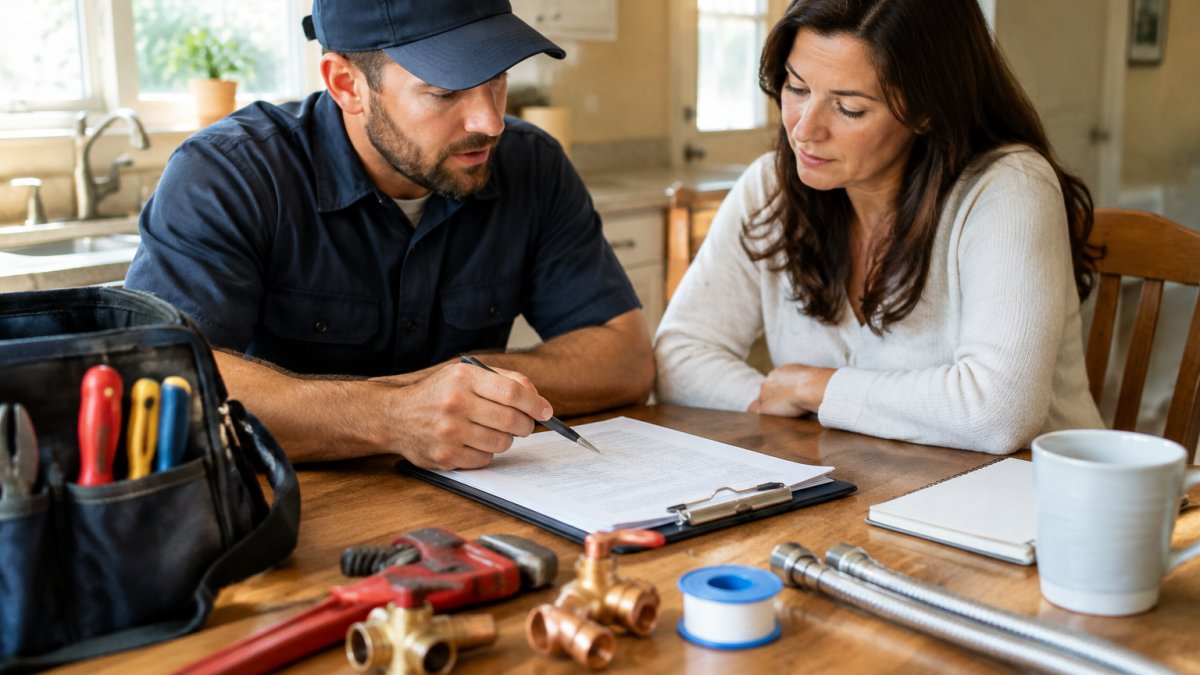
Here’s what a complete estimate should include:
| Line Item | What It Should Show | Why It Matters |
|---|---|---|
| Diagnostic fee | Flat charge for the visit | Confirms the cost before diagnosis |
| Labor | Hours or flat rate | Prevents open-ended billing |
| Parts | Itemized list with markup noted | Exposes hidden surcharges |
| Permits | Included or listed separately | Avoids surprise add-ons |
| Cleanup | Stated or excluded | Clarifies scope of work |
Check for these red flags:
- Lump-sum totals with no breakdown. You can’t verify anything.
- Blank line items. “Miscellaneous” is where costs hide.
- No expiration date. A quote that never expires usually isn’t a quote.
Ask for a repair authorization signature line. A contractor who wants your sign-off before extra work begins is protecting both of you.
The Average Cost of Emergency Plumbing Repairs and What Drives It
Emergency plumbing costs more than scheduled work, and the reason is simple: after-hours labor, urgency, and risk. A burst pipe at 2 a.m. pulls a technician out of bed, and that premium shows up on the bill. But the premium isn’t random, it follows a predictable structure that you can learn to read before you agree to anything.
Most emergency bills break into three charges: the emergency service fee, the labor rate, and parts markup. The emergency service fee is a flat charge for the trip and after-hours availability. The labor rate reflects the technician’s time and skill. Parts markup covers the cost of materials plus handling, and it’s often the least transparent line on the invoice.
Several factors push the total up or down:
- Time of day. Nights, weekends, and holidays carry higher labor rates.
- Type of emergency. A clogged drain is cheaper than a slab leak. A slab leak requires locating the leak under concrete, breaking through the slab, repairing the pipe, and patching the floor, each step adds labor and materials.
- Access. Pipes behind finished walls cost more to reach. The repair itself may be simple, but the drywall removal and restoration add significant cost.
- Parts availability. Rare fixtures and outdated piping take longer to source. If the technician has to make a second trip for a part, you may pay another service fee.
- Water damage. Mold remediation and structural drying add significant cost. A slow leak that soaks drywall for weeks can turn a small repair into a much larger remediation project.
If you’re facing an active leak right now, emergency plumbing services in Plymouth explain what a rapid response call involves and how priority scheduling works.
Emergency Service Fees, Labor Rates, and Parts Markup
Three charges make up most emergency bills. The emergency service fee covers the trip and after-hours availability. Labor rates reflect the technician’s time and skill. Parts markup covers the cost of materials plus handling.
Ask for each one separately. A quote that bundles all three into one number hides where the money goes, and that’s exactly where surprise charges breed. A written estimate should list the service fee, the hourly or flat labor rate, and the parts with markup noted. If the plumber can’t or won’t break it out, that’s a signal to keep asking questions.
Watch out: some companies waive the service fee if you approve the repair, but others charge it regardless. Ask whether the fee is credited toward the work before you schedule the visit.
Your Preventative Plumbing Maintenance Checklist
Preventative maintenance is the cheapest plumbing repair strategy available. A small leak fixed on a scheduled visit costs far less than the same leak after it soaks a ceiling.
Here’s the checklist we recommend homeowners run through each season:
- Test shutoff valves under sinks and behind the toilet
- Check supply lines for cracks or corrosion
- Inspect the water heater for leaks and sediment
- Clear drain traps and test flow
- Look for water stains on ceilings and walls
- Check the sump pump before storm season
- Flush the water heater annually
- Inspect outdoor spigots before the first freeze
One rule worth repeating: skip chemical drain cleaners. They eat through pipes over time and cause the exact failures you’re trying to prevent.
Homeowners often ask whether home plumbing systems actually need maintenance. The short answer is yes, and this guide to home plumbing maintenance explains why. If you’d rather hand the checklist to a professional, the Clayton McKay Comfort Plus Plan covers annual maintenance and priority scheduling.
DIY vs. Professional: Where the Line Actually Sits
Most plumbing content tells you to hire a pro for everything, which isn’t helpful when you’re trying to avoid surprise costs. The real question is where the DIY savings end and the professional premium begins.
Safe to handle yourself:
- Unclogging a sink with a plunger
- Replacing a showerhead
- Swapping a toilet flapper
- Tightening a loose faucet handle
- Replacing a visible supply line under a sink
These tasks share a common trait: if they fail, the damage is contained and visible. A showerhead that leaks at the threads drips into the tub, not into the ceiling.
Call a licensed plumber:
- Anything behind a wall
- Water heater repair or replacement
- Gas line work
- Sewer line issues
- Anything requiring a permit
The threshold is simple: if the repair could cause water damage or violate code, the DIY savings vanish the moment something goes wrong.
A useful decision framework is to ask three questions before you start:
- Can I see the entire failure point? If the leak or clog is visible and accessible, DIY is more likely safe. If it’s behind drywall, under a slab, or inside a wall cavity, stop.
- Does the repair involve a supply line under pressure? Pressurized water lines can spray for hours before you notice. If you can’t shut off the water to that line independently, call a pro.
- Will the repair require a permit or inspection? Permits exist for a reason, and unpermitted work can void insurance claims and fail a home sale inspection. If the job needs a permit, it needs a licensed plumber.
Watch out: even a simple DIY repair can void a manufacturer warranty if it’s not installed to spec. Check the warranty terms before you touch a fixture that’s still covered.
Navigating Home Warranties, Insurance, and Material Quality
A home warranty is a service contract that covers certain repairs for a monthly fee. It is not insurance, and it rarely covers everything homeowners assume it does.
Before you rely on one, check:
- What’s excluded. Most warranties exclude pre-existing conditions and code upgrades.
- Who picks the contractor. Some assign one, which limits your choice.
- The claim cap. Payouts often have per-item limits.
Homeowners insurance works differently. It typically covers sudden damage, like a burst pipe, but not the worn part that caused it. Read the exclusions before you file.
Material quality matters here too. Cheap fixtures fail sooner, and a failed part can void a manufacturer warranty if it wasn’t installed to spec. Licensed installation protects that coverage. If you’re weighing a replacement, water heater repair and installation services outline what proper installation involves.
Requesting a Written Estimate from Clayton McKay
You can’t compare quotes you never received. That’s why we put every job in writing before work begins, with the scope, parts, and labor broken out line by line.
Our team of Massachusetts licensed plumbers, electricians, and certified HVAC technicians covers plumbing, heating, cooling, and electrical work. Comfort Plus+ members get priority scheduling and preferred emergency response when something fails at the worst possible time.
Get started with Clayton McKay and request a quote through our website.
Frequently Asked Questions
What are the most common hidden costs in plumbing repairs?
The usual culprits are emergency service fees, after-hours surcharges, trip or diagnostic charges, parts markup, and permit fees that were never mentioned upfront. Water damage or mold remediation discovered mid-job can also inflate the bill. Ask for a written estimate that separates labor, parts, and any permit requirements so nothing arrives as a surprise. A licensed contractor should be willing to put the scope of work in writing before the first wrench turns.
Is it standard for plumbers to charge a trip fee?
Many companies charge a service call or diagnostic fee to cover the visit itself, separate from the repair. That fee is normal, but it should be disclosed when you book, not added at the end. Ask whether the diagnostic fee is credited toward the repair if you approve the work. Get the number in writing, along with the hourly rate or flat-rate pricing structure, so you can compare quotes fairly.
How do I budget for emergency plumbing services?
Set aside an annual maintenance budget that covers routine drain cleaning, fixture checks, and seasonal inspections, then keep a separate reserve for emergencies. Burst pipes and water heater failures rarely announce themselves. A maintenance membership can reduce repair costs and extend plumbing system longevity, which lowers the odds of a middle-of-the-night call. Review your home warranty coverage too, since many policies exclude older, outdated piping.
Are there ways to prevent plumbing emergencies before they happen?
Yes. Follow a preventative plumbing maintenance checklist: inspect supply lines for corrosion, test shutoff valves, flush the water heater annually, and avoid chemical drain cleaners that damage pipes. Watch for slow drains, rising water bills, and discolored water, which signal problems early. Scheduling annual maintenance and addressing small leaks quickly is the most reliable way of avoiding surprise plumbing repair costs.


Leave A Comment