

Table of Contents
- Why South Shore Homeowners Are Replacing HVAC Systems in 2026
- How to Choose an HVAC Installer You Can Trust
- What an HVAC Installation Quote Should Include
- HVAC Contractor Questions to Ask Before You Sign
- HVAC Installation Timeline: What to Expect Week by Week
- Rebates, Incentives, and How to Size Your New System
- Maintenance DIY Tips and Service Plans That Protect Your Investment
- Frequently Asked Questions
Last Updated: October 13, 2026
Why South Shore Homeowners Are Replacing HVAC Systems in 2026
Homeowners across the South Shore are replacing aging heating and cooling systems at a steady pace, driven by rising repair costs and a push toward energy efficiency. If you are searching for hvac installation services south shore residents trust, this guide from Clayton McKay walks through what the process actually involves, from choosing a licensed contractor to sizing your new system correctly.
Older furnaces and air conditioners lose efficiency every year. A system that ran fine a decade ago now cycles longer, costs more to operate, and fails more often during peak heating and cooling seasons.
Replacement is not just about comfort. A properly sized, professionally installed system uses less energy and holds up longer under regular maintenance. The decisions you make before installation, especially around the contractor you hire and the equipment you select, shape how well the system performs for the next fifteen years.
How to Choose an HVAC Installer You Can Trust
Choosing the right HVAC contractor matters more than the brand of equipment you buy. A well-installed mid-range system will outperform a poorly installed high-end one every time. Start by verifying credentials before you ever discuss equipment.
Licensing, Insurance, and What to Verify
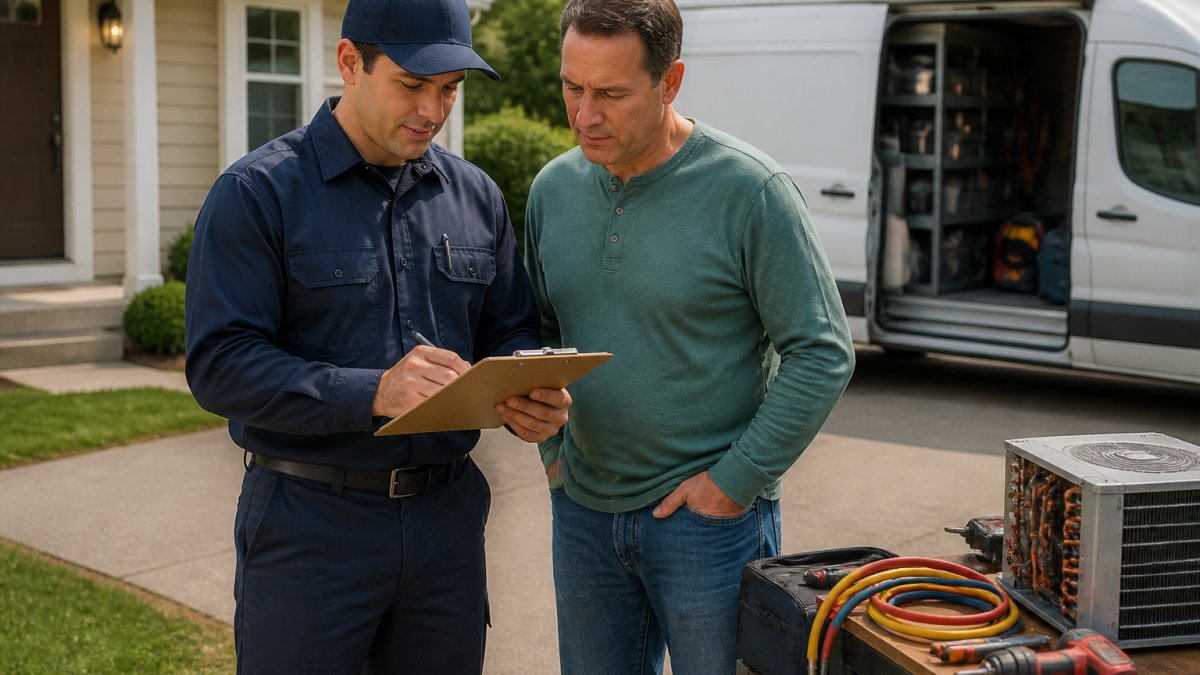
Ask for the contractor’s state license number and confirm it is active. A legitimate company carries both liability insurance and workers’ compensation coverage. If a technician gets injured on your property and the company is uninsured, that becomes your problem. Request a certificate of insurance and do not accept a verbal promise.
Local Experience and Service Area Coverage
A contractor who works in your area regularly understands local code requirements, permit processes, and the climate demands your system faces. Ask how long the company has served your region and whether they handle permits themselves.
At Clayton McKay, our technicians are Massachusetts licensed and have served Plymouth, the South Shore, and Cape Cod since 1973, so we know what these homes need.
What an HVAC Installation Quote Should Include
A complete HVAC installation quote is a written document that itemizes equipment, labor, permits, and any additional work required. An estimate that lists a single lump-sum price without detail is impossible to compare against other bids.
Line Items to Look For (and Red Flags to Avoid)
| Quote Element | What It Should Say | Red Flag |
|---|---|---|
| Equipment | Brand, model number, SEER2 rating, capacity in tons | “High-efficiency unit” with no model number |
| Labor | Installation hours, crew size | No labor breakdown at all |
| Permits | Who pulls them, cost included | Homeowner told to pull permits |
| Ductwork | Sealing, repair, or replacement noted | Ductwork ignored entirely |
| Disposal | Old equipment removal and disposal | Not mentioned |
| Warranty | Parts and labor terms in writing | Verbal warranty only |
A quote that skips permits or ductwork is not a bargain. It is an incomplete job waiting to cost you more later.
HVAC Contractor Questions to Ask Before You Sign
The right questions separate a professional operation from a crew that disappears after the check clears. Ask these before signing anything:
- How many years has your company operated in this area?
- Are your technicians licensed and insured, and can I see proof?
- Will you perform a load calculation before recommending equipment size?
A contractor who answers these clearly and without hesitation is worth your business. One who dodges the load calculation question is not.
HVAC Installation Timeline: What to Expect Week by Week
A typical residential HVAC installation takes one to three days of on-site work, but the full process from first call to final inspection usually spans one to three weeks. The single biggest variable is not labor, it is permitting and equipment availability. Knowing the sequence helps you plan around the disruption and spot a contractor who is cutting corners.
- Week 1, Consultation and load calculation. A technician walks the home, measures rooms, checks insulation, window orientation, and existing ductwork, then runs a load calculation. You receive a written quote with itemized equipment, labor, permits, and ductwork. Expect one to three days for this stage depending on how quickly you review options.
- Week 2, Permits and equipment ordering. In most jurisdictions, a mechanical permit is required for a system replacement, and the contractor pulls it, not you. Permit approval can take anywhere from same-day over-the-counter issuance to several business days depending on the local building department. Standard equipment is often stocked locally and arrives within a few business days; high-efficiency or special-order units can take longer.
- Week 3, Installation and inspection. Install day is typically one to three days. A straight swap of a furnace or air conditioner is usually a single day. Adding or modifying ductwork, converting from one fuel type to another, or installing a heat pump with new line sets can push it to two or three days. A final municipal inspection follows, and the contractor should schedule it and provide you the sign-off.
What Actually Happens on Install Day
A typical install day follows a predictable sequence: the crew protects floors and work areas, recovers refrigerant from the old system if applicable, disconnects electrical and gas or refrigerant lines, removes and hauls away the old equipment, sets the new unit, connects line sets or flue, seals ductwork connections, evacuates and charges the system, then commissions it, checking refrigerant charge, airflow, temperature split, and static pressure.
What Can Stretch the Timeline
- Permit backlogs. Building departments get busy in spring and fall. A permit that normally issues in a day can take a week.
- Equipment availability. Supply chain swings still affect specific models and tonnages. A contractor who promises a next-day install on a special-order unit is guessing.
- Ductwork surprises. Once walls are open, hidden leaks, undersized returns, or asbestos-wrapped ductwork can add days and cost.
Emergency replacements compress this timeline. If your furnace fails in January, a good contractor will prioritize you, but equipment availability can still add delays. Do not let urgency push you past a load calculation or a written, itemized quote, those two steps protect you more than speed does.
Budget one to three weeks from first call to final inspection for a standard replacement. The install itself is the short part; permits, equipment lead time, and any ductwork or fuel-conversion work are what move the finish line.
Rebates, Incentives, and How to Size Your New System
Sizing is the step most homeowners underestimate. An oversized system short-cycles, wears out faster, and leaves rooms humid in summer. An undersized one runs constantly and never quite keeps up. Neither problem shows up on a spec sheet, which is why load calculations matter.
Load Calculations: Why Square Footage Alone Isn’t Enough
A proper load calculation, often called a Manual J calculation, measures your home’s actual heating and cooling needs. It factors in window orientation, insulation levels, ceiling height, air leakage, and local climate data.
Ask your contractor to show you the load calculation results. Federal and state incentive programs for high-efficiency equipment change regularly, so check current eligibility through the U.S. Department of Energy’s energy saver resources and confirm details with your contractor before assuming a rebate applies.
Maintenance DIY Tips and Service Plans That Protect Your Investment
Regular maintenance extends equipment life and keeps your warranty valid. Some tasks you can handle yourself; others belong to a licensed technician. But the bigger money question most homeowners ask is not what to clean, it is what incentives and sizing decisions actually lower the cost of ownership. That is where this section goes beyond the usual checklist.
The Rebate and Incentive Layer Most Contractors Skip
High-efficiency equipment often qualifies for federal tax credits and utility-administered rebates, and those programs change year to year. The federal energy efficient home improvement credit, administered through the IRS, has historically covered a percentage of the cost of qualifying heat pumps, furnaces, and insulation upgrades, subject to annual caps (Home energy tax credits).
Two practical rules apply:
- Confirm eligibility before you buy, not after. Rebate programs frequently require pre-approval or a specific efficiency tier. A unit that misses the threshold by a fraction of a rating point gets you nothing.
- Keep the paperwork. You will need the model and serial numbers, the invoice, and often the load calculation and permit number to claim. A contractor who does not offer to handle rebate submission is leaving money on the table.
Check current programs through the U.S. Department of Energy’s energy saver resources and your utility’s own rebate page, then confirm details with your contractor before assuming a rebate applies.
Why Sizing Is the Maintenance Decision You Make Once
Sizing is the step most homeowners underestimate, and it is the one that determines how much maintenance your system needs over its life.
A proper load calculation, often called a Manual J calculation, measures your home’s actual heating and cooling needs. It factors in window orientation, insulation levels, ceiling height, air leakage, and local climate data. Two homes of identical square footage can need systems of different capacities.
DIY vs. Professional: Where the Line Sits
What you can do:
- Replace air filters every one to three months, more often during heavy heating or cooling season, or if you have pets
- Keep outdoor condenser units clear of leaves, grass clippings, and debris, with at least two feet of clearance
- Check that vents and registers are unobstructed by furniture or rugs
- Listen for unusual noises and note them for your technician
What to leave to a professional:
- Refrigerant checks and charging, handling refrigerant requires certification
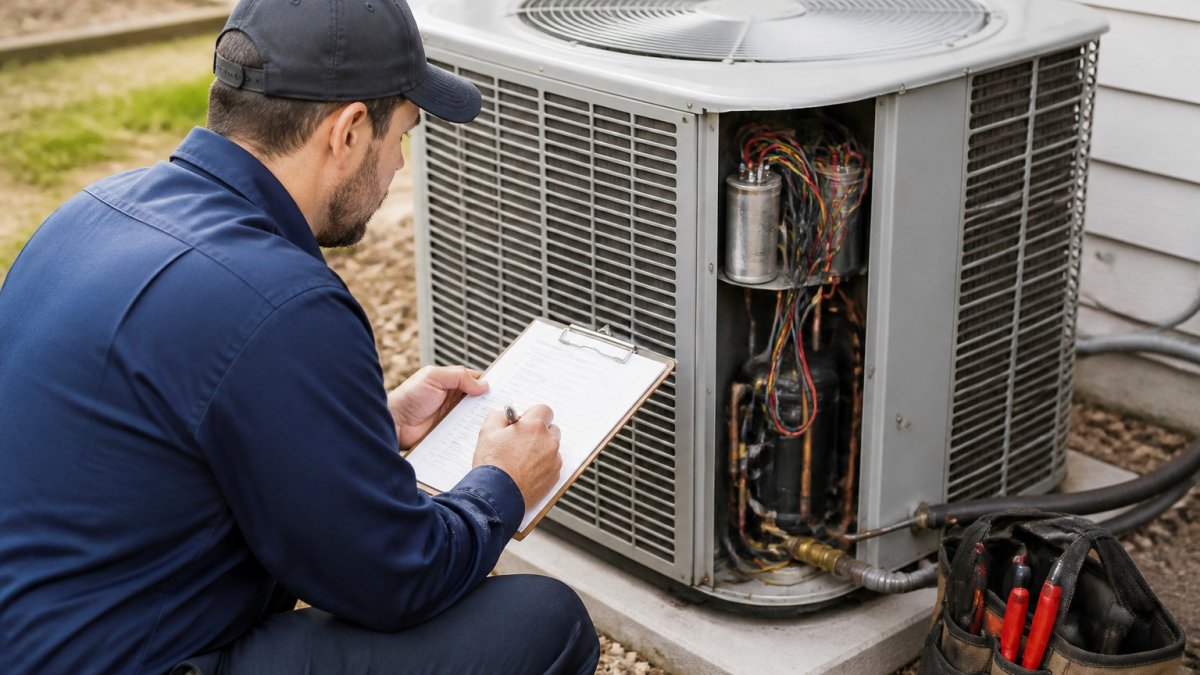
- Electrical component testing and capacitor or contactor replacement
- Ductwork sealing and repair
- Seasonal tune-ups and system performance testing, including static pressure and temperature split
What a Service Plan Should Actually Include
A service plan bundles professional visits into a predictable schedule and typically covers a spring cooling tune-up and a fall heating tune-up. When comparing plans, look for: how many visits per year, whether the plan includes priority scheduling for emergencies, what percentage discount applies to repairs, whether the plan transfers if you sell the home, and whether it voids or preserves your manufacturer warranty.
Maintenance is the cheap part. The expensive decisions are sizing and incentive eligibility, and both are made before install day. Get the load calculation in writing, confirm rebate eligibility before you sign, and choose a service plan that includes scheduled tune-ups, not just a repair discount.
Frequently Asked Questions
What is the $5,000 rule in HVAC?
The $5,000 rule is a rough guideline some homeowners use: if a repair costs more than $5,000 or exceeds half the price of a new system, replacement often makes more financial sense. It is not a hard rule. Age, efficiency, refrigerant type, and how long you plan to stay in the home all matter. A licensed contractor can run the numbers for your specific system before you decide.
What should I compare when getting HVAC installation quotes?
Compare more than the bottom-line number. Look at equipment brand and model numbers, SEER2 ratings, whether the quote includes a Manual J load calculation, ductwork modifications, thermostat installation, permit fees, and labor warranty terms. A low quote that skips load calculations or permits often costs more later. Ask each contractor to itemize so you can compare apples to apples.
How long does HVAC installation take?
A straightforward furnace or central air conditioning replacement typically takes one to two days for the equipment swap. If ductwork modifications, electrical panel upgrades, or system conversions are involved, plan for three to five days. Heat pump installations with new line sets can run two to three days. Your contractor should give you a written timeline before work begins.
What questions should I ask an HVAC contractor before hiring?
Ask about licensing and insurance, whether they pull permits, if they perform load calculations, what brands they carry, and how they handle warranty claims. Ask who will actually do the work, whether it is their employees or subcontractors. Request references from similar installations in your area. A contractor who hesitates on any of these is worth a second look before you sign.
Replacing an HVAC system is a significant investment, and the contractor you choose determines whether that investment pays off. Clayton McKay has served South Shore and Cape Cod homeowners since 1973 with Massachusetts licensed plumbers, electricians, and certified HVAC technicians. Our Comfort Plus+ membership delivers priority rapid response, extended equipment lifespan, and maintained manufacturer warranties. Get started with Clayton McKay and get an instant quote for your installation.

Leave A Comment