

Last Updated: November 7, 2026
Quick Summary
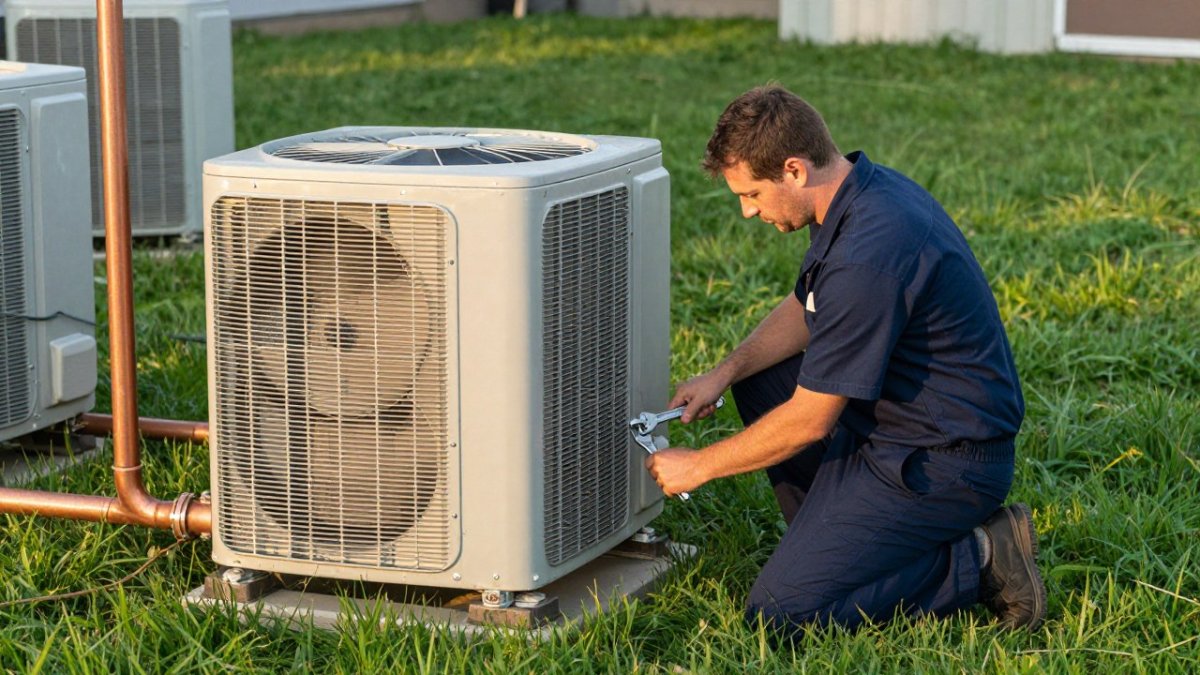
Central air conditioning repair in Plymouth starts with reading the symptom: weak airflow usually means a clogged filter, blower, or duct problem, while warm vents often point to low refrigerant or a compressor that isn’t running. Check the thermostat, filter, outdoor unit, breaker, and condensate drain first, then call a licensed technician for anything involving refrigerant, wiring, or a compressor that won’t start.
- Replace or clean the air filter every 1-3 months to prevent weak airflow.
- Give the outdoor condenser at least two feet of clearance on all sides.
- Reset a tripped breaker once; if it trips again, stop and call a technician.
- A burning smell means shut the system down and call a technician.
- Ask whether the diagnostic fee is credited toward the repair before anyone arrives.
Table of Contents
- Central Air Conditioning Repair in Plymouth: Start With the Symptoms
- Common Central Air Conditioning Problems and What They Mean
- Step-by-Step Central AC Troubleshooting Before You Call
- When to Stop Troubleshooting and Call a Technician
- What Central AC Repair Cost Actually Depends On
- Central AC Repair or Replacement: How to Decide
- Central Air Conditioner Maintenance That Prevents Most Repairs
- Book a Central AC Repair Visit With Clayton McKay
- Frequently Asked Questions
Central Air Conditioning Repair in Plymouth: Start With the Symptoms
When the house stops cooling in the middle of a summer stretch, most homeowners reach for the thermostat first. That’s the right instinct, and it’s also where a smart approach to central air conditioning repair in Plymouth begins. At Clayton McKay, we’ve worked on cooling systems across the South Shore and Cape Cod, and the pattern holds: the symptom you notice first usually points to one of a handful of causes. Read the system before you call anyone.
Below, we walk through what each symptom means, what you can safely check yourself, and when to stop and call a licensed technician.
Common Central Air Conditioning Problems and What They Mean
Most central AC failures trace back to airflow restrictions, refrigerant problems, electrical faults, or a dirty coil. Knowing which category your symptom falls into saves time and money.
Weak Airflow and Warm Vents
Weak airflow usually means a blocked filter, a failing blower, or a duct problem. Warm air from the vents often points to low refrigerant or a compressor that isn’t running. Start with the filter. A clogged air filter is a common and inexpensive fix, and it restricts airflow across the whole system. If a fresh filter doesn’t restore strong airflow, the issue is deeper. If you’re getting warm air specifically, our guide on why your air conditioner is blowing warm air explains the likely causes before you pick up the phone.
Strange Noises, Smells, and Water Where It Shouldn’t Be
Noises and smells are warning signs you shouldn’t ignore. Banging or clanking suggests a loose or broken component inside the compressor. Squealing points to a failing belt or bearing. A musty smell means microbial growth in the ducts or on the evaporator coil. A burning smell means shut the system down and call a technician. If you’ve spotted moisture, our breakdown of why water is leaking from your air conditioner covers the common culprits.
Step-by-Step Central AC Troubleshooting Before You Call
Run these checks in order before you schedule a service call. Each takes minutes and rules out the simple stuff.
- Check the thermostat. Confirm it’s set to COOL, the temperature is below room temp, and the batteries aren’t dead. A blank or unresponsive display is a power issue, not a cooling issue.
- Replace the air filter. A dirty filter is the top cause of weak airflow. Swap it for a clean one and recheck.
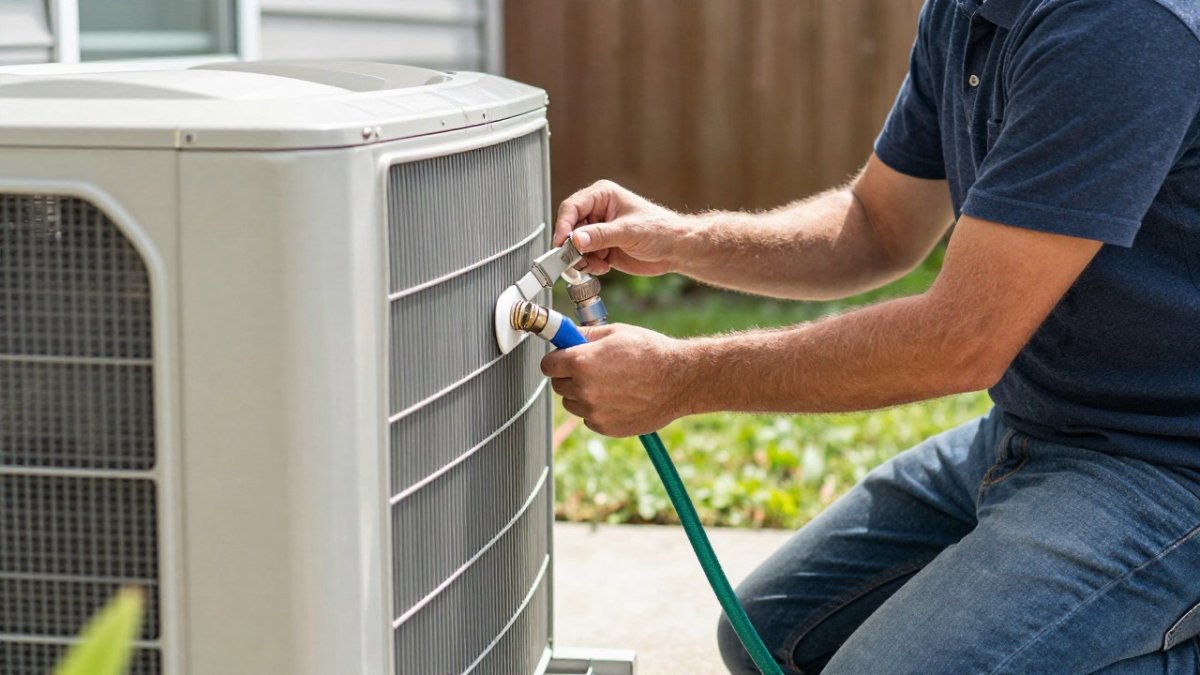
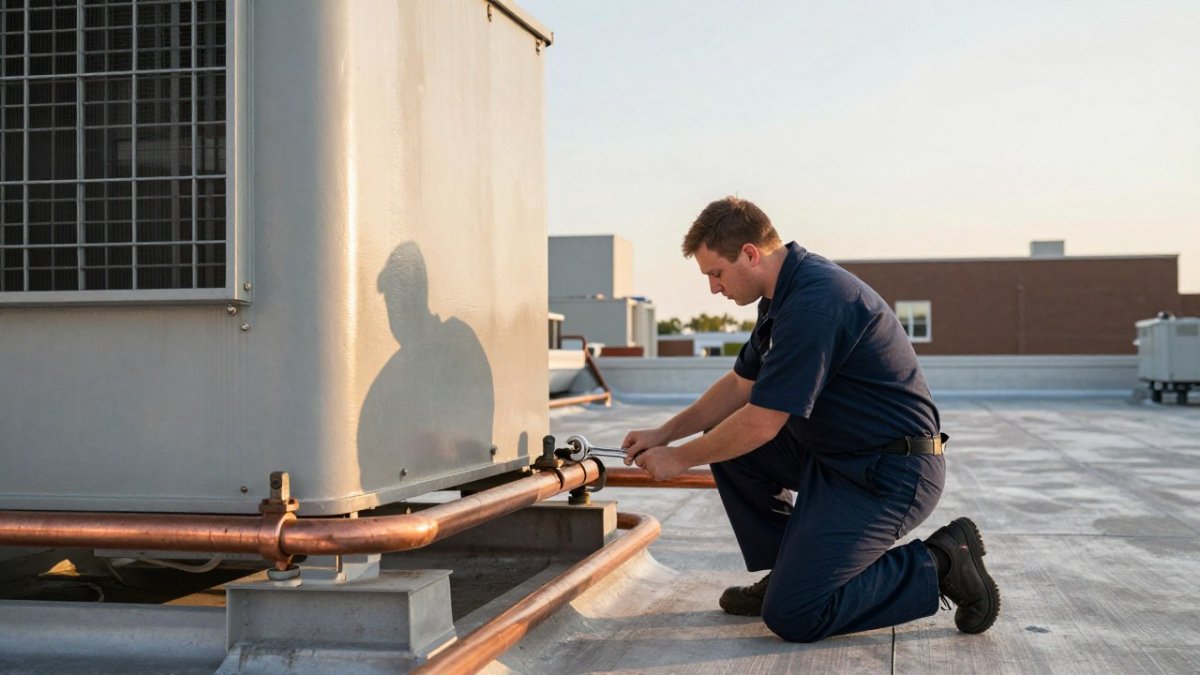
- Inspect the outdoor unit. Clear leaves, grass clippings, and debris from around the condenser. Give it at least two feet of clearance on all sides.
- Check the breaker. A tripped breaker cuts power to the condenser. Reset it once. If it trips again, stop and call a technician, because that points to an electrical fault.
- Look at the condensate drain. A clogged drain line backs up water and can shut the system down. Clear visible clogs if you can reach them safely.
- Confirm the blower runs. Set the fan to ON at the thermostat. If the blower doesn’t respond, the problem is in the indoor unit.
If the system still won’t cool after these steps, you’ve done the safe troubleshooting. The next step is a professional diagnosis.
When to Stop Troubleshooting and Call a Technician
Stop and call a licensed technician the moment you hit anything involving refrigerant, electrical panels beyond a breaker reset, or a compressor that won’t start. Refrigerant handling is regulated and requires certification, and poking at wiring or a sealed compressor risks injury. A few signals mean it’s time to call right away:
- The breaker trips repeatedly after a reset
- You smell burning or see scorch marks
- The outdoor unit hums but the fan won’t spin
- Ice forms on the refrigerant lines or indoor coil
- Water is pooling and you can’t clear the drain
For homeowners who’ve decided it’s time to bring in a pro, you can book central AC repair in Plymouth with a licensed team.
What Central AC Repair Cost Actually Depends On
Central AC repair cost depends on the diagnosis, the parts involved, and how accessible the failed component is. There’s no honest flat number, and any provider who quotes one before looking at your system is guessing. What drives the final price:
- The failed part. A capacitor or contactor costs far less than a compressor or evaporator coil. Parts that are common and easy to source sit at the low end; sealed components like the compressor sit at the high end.
- Refrigerant. If the system is low, the technician must find and fix the leak before recharging. The leak search itself takes time, and refrigerant is priced by the pound, so a slow leak that has drained the system adds both labor and material.
- Access and labor. A component buried in an attic or tight crawlspace takes longer to reach and replace. Labor is usually the largest line on the estimate, and accessibility is the biggest swing factor in it.
- System age and brand. Older or less common equipment can mean harder-to-source parts and longer lead times, which can raise the price or delay the repair.
- Time and season. Emergency or after-hours calls typically carry a premium over scheduled visits, and peak-summer demand can affect scheduling and pricing.
A common pattern in repair estimates is that the diagnostic fee is separate from the repair and may or may not be credited toward the work. Ask before anyone arrives.
Watch out: a quote that is dramatically lower than every other estimate usually means a missing line item, such as refrigerant, a permit, or the labor to reach a difficult component. Compare the scope, not just the total.
At Clayton McKay, we provide upfront pricing and no hidden fees, so you know the number before we start. For current rates, request a quote directly and we’ll give you a written estimate based on your actual system.
Central AC Repair or Replacement: How to Decide
Repair often makes sense when the system is relatively young, the repair is a single component, and the unit has been maintained. Replacement makes more sense when repairs pile up, the compressor fails on an aging system, or your cooling bills keep climbing despite fixes. Rather than rely on a single rule, work through four factors together:
- System age versus expected life. Central air conditioners generally have a finite service life that regular maintenance can help extend. If your unit is near or past that range, a major repair buys less remaining life per dollar.
- Repair frequency. One repair in a season is normal. Two or more in a year, or repeat failures of the same component, point to a system that is wearing out rather than one with an isolated fault.
- Efficiency and operating cost. A system that keeps running but never cools well, or that drives up summer electric bills despite clean filters and a recent tune-up, is often losing efficiency at the coil or compressor. A newer, correctly sized unit may reduce operating cost, depending on your home and usage.
- The repair estimate relative to replacement. A common approach is to weigh repair cost against replacement cost and the unit’s remaining life: when a repair is large relative to replacement and the system is near the end of its life, replacement may be the better use of money.
A transparent way to apply these: if the unit is under 10 years old and the repair is a single, accessible component, repair. If the unit is over 12 years old and the repair involves the compressor, evaporator coil, or refrigerant leak, get a replacement quote alongside the repair estimate and compare total cost of ownership over the next several years, not just today’s bill. If the unit is between 10 and 12 years old, the decision usually comes down to repair frequency and how the estimate compares to replacement.
Watch out: a contractor who recommends replacement without diagnosing the actual fault, or who quotes a new system before explaining what failed, is skipping the step that protects your money. Ask what failed, why, and what the repair would cost before you consider replacement.
If you’re leaning toward a new system, you can explore air conditioner installation and replacement in Plymouth and request a free estimate on an upgrade. We’ll walk you through efficiency options and sizing so the new unit fits your home, not just the old footprint.
Central Air Conditioner Maintenance That Prevents Most Repairs
Central air conditioner maintenance is the cheapest repair you’ll ever do, because it prevents the expensive ones. A seasonal tune-up can catch low refrigerant, dirty coils, worn capacitors, and clogged drains before they turn into breakdowns. The schedule that works:
| Task | How Often | Who Does It |
|---|---|---|
| Replace or clean air filter | Every 1-3 months | Homeowner |
| Clear debris around condenser | Monthly in cooling season | Homeowner |
| Check condensate drain | Monthly in cooling season | Homeowner |
| Professional tune-up and coil cleaning | Once a year, before summer | Licensed technician |
| Full system inspection and refrigerant check | Annually | Licensed technician |
A maintenance plan takes the guesswork out of that schedule. Our air conditioner preventative maintenance plan includes priority service for members. Regular maintenance can help extend equipment life and catch small issues early.
Book a Central AC Repair Visit With Clayton McKay
A cooling system that quits in July is a problem you want solved fast, and the difference between a quick fix and a costly mess is who you call. Clayton McKay is a family-owned business serving Plymouth, the South Shore, and Cape Cod since 1973, with Massachusetts licensed plumbers and electricians and certified HVAC technicians on staff.
When the thermostat climbs and the house won’t cool, you need a diagnosis you can trust and a price you can see before the work begins. Clayton McKay brings licensed technicians and a single-source team for cooling, heating, plumbing, and electrical needs.
Frequently Asked Questions
How much do central AC repairs cost on average?
Pricing depends on the diagnosis, the part needed, and how long the job takes, so a responsible provider won’t quote a flat number before seeing the system. A clogged drain line or a failed capacitor is a short visit; a compressor or evaporator coil is a much bigger job. Ask for an estimate in writing, including diagnostic fees and any charges for refrigerant.
What are the most common central air conditioning problems?
The most frequent issues are clogged air filters, dirty condenser coils, low refrigerant from a leak, failed capacitors or contactors, a stuck thermostat, and blocked condensate drains. Many of these start as weak cooling or short cycling before they become a full breakdown. Checking your filter monthly and keeping the outdoor unit clear of debris prevents a good share of them, and an annual tune-up catches the rest early.
How can I tell whether my central AC needs repair or replacement?
Weigh the age of the system, the size of the repair, and how often it has failed. An older unit with a repair bill that is large relative to the cost of a new system may point toward replacement. Frequent service calls in consecutive seasons are another sign. A technician can assess system efficiency and refrigerant charge to help inform the decision.
When should I call a professional for central AC repair?
Stop and call when you smell burning or gas, see water pooling near the indoor unit, hear grinding or screeching from the compressor, or the breaker trips repeatedly. Those point to electrical, refrigerant, or mechanical faults that need licensed hands. If a filter change and thermostat check don’t restore cooling within an hour, book a same-day service call rather than running the system and risking more damage.




Leave A Comment